
Most advice on rezi gets the decision wrong. It treats this as a feature contest, when the fundamental choice is simpler: do you need a tool to optimise one CV thoroughly, or a system to manage the whole job search?
For UK job seekers, that distinction matters more than another AI button or another score. rezi is strongest when the job is document optimisation. A platform like CV Anywhere makes more sense when the job is building, tailoring, tracking, and keeping multiple applications organised without relying on spreadsheets and scattered drafts.
Rezi vs CV Anywhere: A Quick Summary
If the goal is to decide between rezi and an all-in-one alternative, the short answer is this: rezi is a specialist CV writing tool, while CV Anywhere is a workflow tool for the wider application process.
Rezi focuses on helping candidates refine the content of a single CV around a target job description. Its strength is structured AI guidance, ATS-focused formatting, and keyword prioritisation. That suits applicants who already know which role they want and need to tighten one document fast.
CV Anywhere takes a broader approach through its job search platform. It combines CV creation, job description fit checking, and application tracking in one workspace. For UK candidates applying across several roles, that difference is practical. The problem usually isn't just writing the CV. It's keeping every version, role, deadline, and follow-up under control.
| Feature | Rezi | CV Anywhere |
|---|---|---|
| Core focus | AI-led CV optimisation | End-to-end job search workflow |
| Best for | One CV tailored closely to one role | Multiple tailored applications |
| ATS support | Strong keyword analysis and formatting guidance | Practical fit checking within a broader workflow |
| Tracking applications | Not the core use case | Built into the platform |
| Working style | Specialist tool | Integrated workspace |
Is your resume actually getting responses?
Your resume might be missing something important
Upload your resume → see its weakest areas → fix them, one by one.
Free. Takes less than 2 minutes.
What is Rezi? An AI-Powered CV Writing Specialist
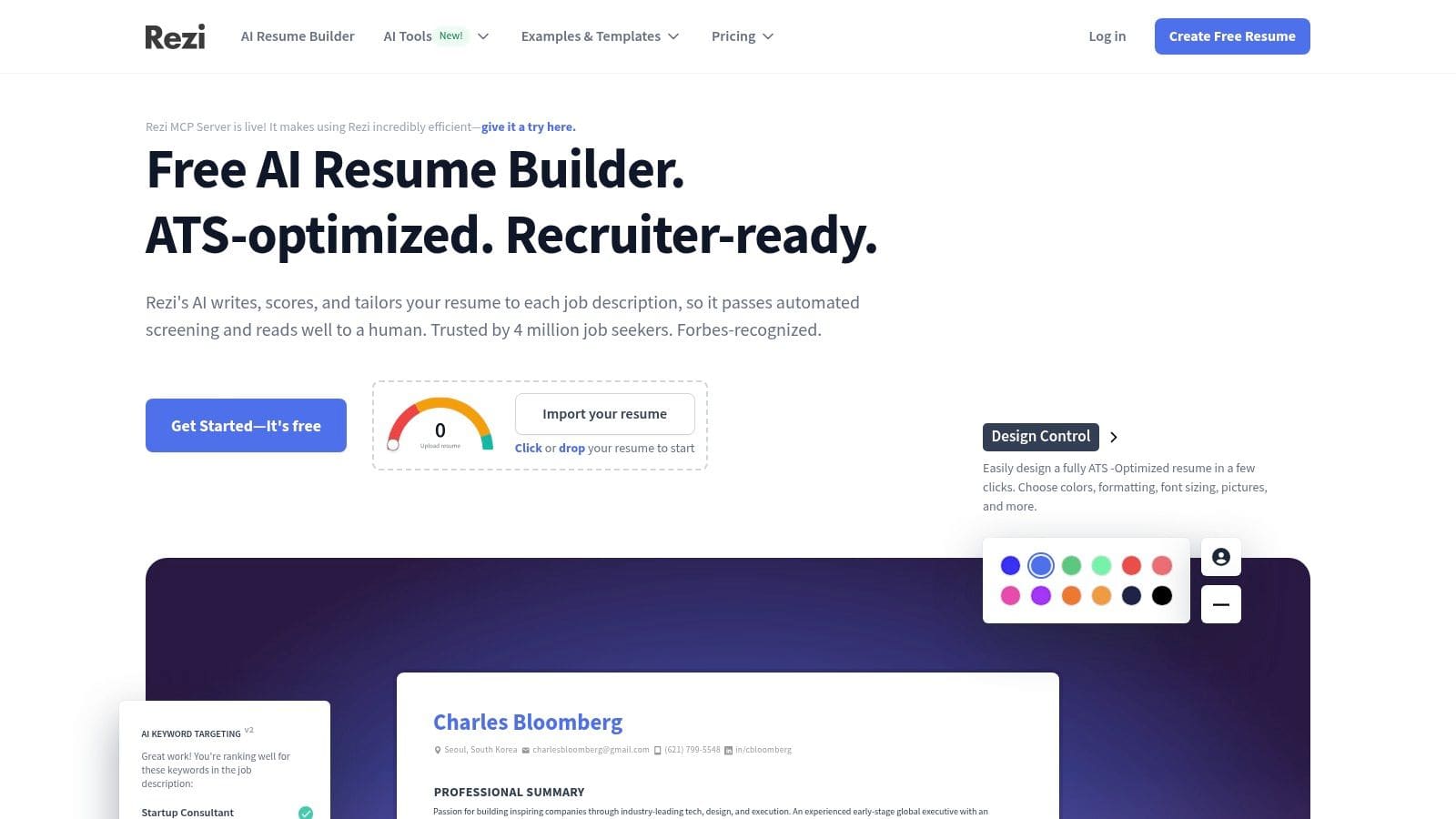
Rezi is best understood as a CV optimisation specialist, not a general job search platform. Its main job is to help candidates create an ATS-friendly CV that aligns more closely with a specific job description.
That matters because many candidates still treat tailoring as a last-minute keyword edit. Rezi pushes the process further. It analyses the job advert, identifies important terms and themes, and then guides the user to improve bullet points, summaries, and skills so the CV reflects the role more directly.
How rezi approaches CV writing
The underlying logic is more structured than a simple scanner. According to the Rezi resume checker documentation, the platform breaks the job description into categories such as company information, role requirements, compensation or benefits, and the application process. It also detects the posting language and ranks extracted keywords by priority from 1 to 3, where 3 means requirement, 2 means preference, and 1 means optional.
That's useful in real UK applications because many job adverts mix essential criteria, nice-to-have skills, and compliance language in the same posting. A candidate who treats every keyword equally often ends up with a bloated CV. A ranked system is more practical. It helps the user deal with the most material requirements first.
Practical rule: If a tool helps add more words but doesn't help decide which requirements matter most, it only solves half the tailoring problem.
Rezi also has enough operating history to look like an established product rather than a short-lived AI launch. It was founded in 2015 and, according to Latka's company profile for Rezi, reached $3.2 million in annual recurring revenue in 2024, up from $2.4 million in 2023, with around 150,000 customers and roughly 30 employees.
Where rezi fits well
Rezi works best for candidates who already have the basics and need stronger alignment.
That often includes:
- Experienced applicants targeting one role: They need sharper wording, better emphasis, and cleaner ATS presentation.
- Technical or structured applications: These often reward precise terminology and clearer matching to requirements.
- Career changers who need help reframing: A targeted AI drafting tool can reduce blank-page friction.
For candidates moving into a new field, the practical challenge is often expressing transferable experience clearly. A useful companion resource is this Access Courses Online guide for career changers, which covers how to present limited or indirect experience without padding the CV.
Candidates comparing options in this category may also want a more workflow-led rezi alternative comparison, especially if the issue isn't just writing quality but managing repeated applications.
What is CV Anywhere? An Integrated Job Search Workspace
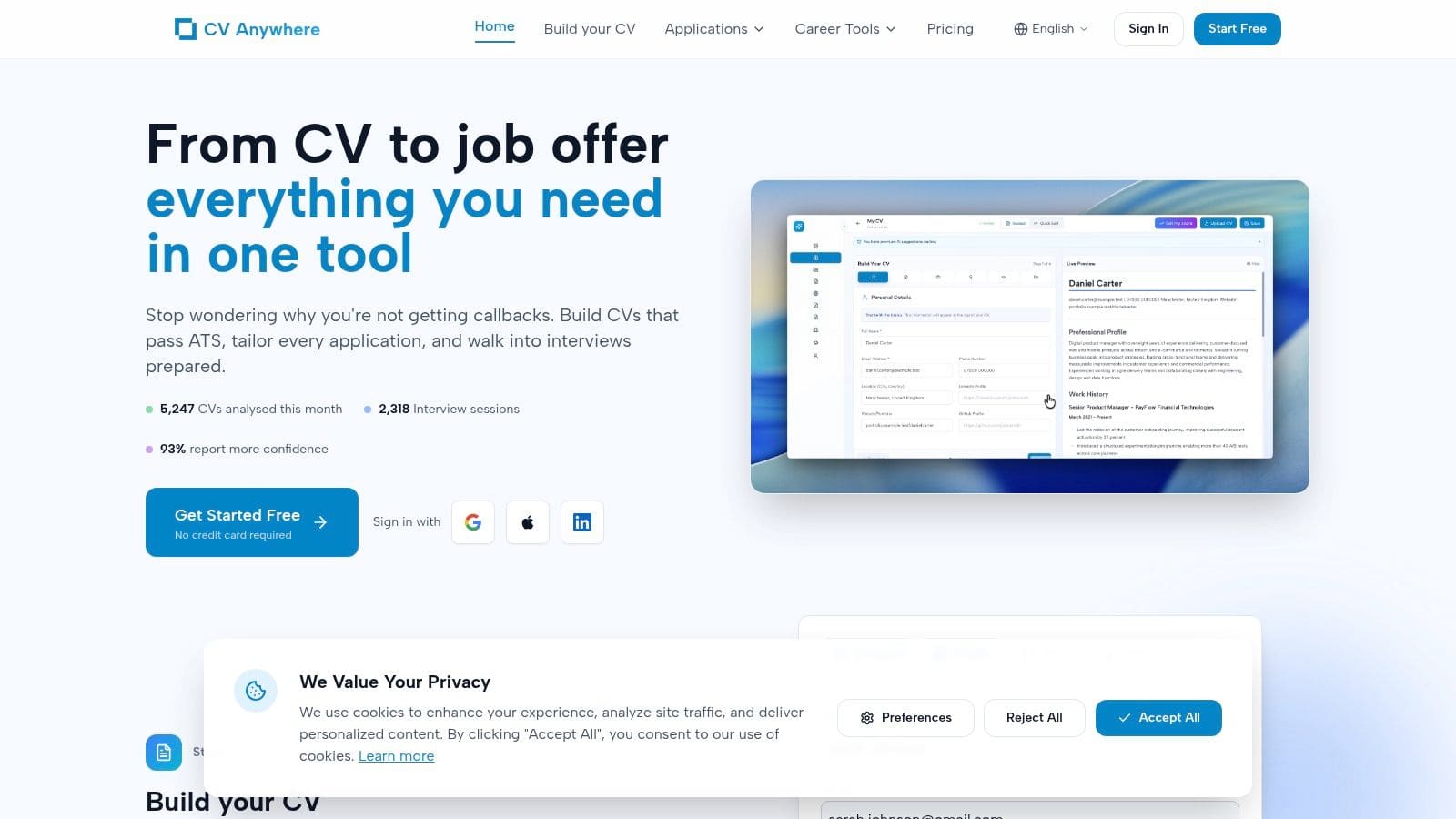
CV Anywhere sits in a different category. It isn't built only to improve a single CV. It's designed to support the whole application cycle, from drafting and tailoring through to tracking what has been sent, where, and what needs a follow-up.
That difference is easy to miss until a candidate starts applying seriously. One polished CV is useful. Five customized versions, ten job descriptions, interview notes, status updates, and reminders create a different problem. At that point, the workflow matters as much as the document itself.
How the workspace model changes the job search
An integrated system is useful because job seekers rarely fail at one isolated task. They usually lose momentum through fragmentation. The CV sits in one file, notes in another app, deadlines in email, and application status in a spreadsheet that stops being updated after the first few weeks.
CV Anywhere is built around three connected functions rather than one editing screen:
- Smart CV Builder: Creates a polished, ATS-friendly CV with AI-assisted summaries and skill alignment.
- Job Description Fit Checker: Analyses a role and highlights fit or gaps so tailoring is more deliberate.
- Application Tracker: Stores roles, statuses, reminders, and notes in one place.
These features are outlined on the CV Anywhere features page.
Where that approach helps more than a specialist editor
A workflow platform is especially useful when the candidate is applying across several role types or employers. That's common in the UK market, where a job seeker may target private sector roles, public sector applications, and graduate programmes at the same time, each with slightly different expectations.
A strong CV is only one part of a successful search. Candidates also need a system for remembering what they sent and why they sent it.
The practical value is less about novelty and more about consistency. If the candidate can see each vacancy, the specific version used, the current stage, and any follow-up action, the search becomes easier to manage. That reduces rushed rework and duplicate effort.
This is why the rezi versus CV Anywhere decision isn't really about which tool has more AI features. It's about whether the bottleneck is writing or workflow.
Head-to-Head: Rezi vs CV Anywhere Compared
The clearest way to compare these tools is by looking at what job they're built to do. On paper they overlap, because both sit near CV creation and optimisation. In practice, they solve different parts of the process.
Rezi vs CV Anywhere Feature Comparison
| Feature | Rezi | CV Anywhere |
|---|---|---|
| AI writing and rewriting | Strong focus on content generation and refinement | Supports CV drafting within a broader workflow |
| ATS optimisation approach | Deep keyword extraction and priority ranking | Job fit checking tied to practical tailoring |
| CV formatting style | Structured, ATS-first approach | ATS-friendly CV building with workflow support |
| Application tracking | Limited as a core function | Built-in tracker for roles, stages, reminders, and notes |
| Best use case | Perfecting one targeted CV | Running an organised multi-application search |
| Ideal user | Candidate focused on document quality first | Candidate focused on process control and consistency |
AI writing and optimisation
Rezi is stronger when the candidate wants an AI-first drafting experience. Its value sits in turning a job advert into a clearer set of writing priorities, then helping reshape bullet points and summaries around that target.
That makes it more of a writing assistant than a workspace. It's useful when the user has enough raw experience but struggles to express it tightly. For many applicants, that's the hardest part.
CV Anywhere is the better fit when writing quality matters, but the process around that writing matters too. A candidate applying to several roles usually doesn't just need one improved draft. They need version control, role-level context, and a way to keep each customized CV connected to the right application.
ATS compatibility and job description matching
This is the area where rezi has the clearest technical identity. Its ATS checker uses a multi-stage pipeline that ranks keywords by requirement, preference, or optional status, rather than treating all matches as equal, as described in the earlier section. That approach is useful because it helps candidates focus on the terms that are most likely to carry weight.
There's also third-party benchmark data. In a 2026 comparison published by Resume Optimizer Pro's AI builder benchmark, Rezi recorded a 92% parse rate, 83% average match score, and 86% ATS pass rate at a 60% threshold. The same benchmark placed it behind Resume Optimizer Pro and Jobscan on those simulated measures.
Those numbers are useful, but they shouldn't be over-read. Simulated ATS testing tells a candidate something about parsing and match behaviour. It does not solve the full UK application problem, where evidence, brevity, and relevance still decide whether a recruiter keeps reading.
Key takeaway: ATS scores are a diagnostic tool. They help spot weak alignment. They don't replace judgement about whether the CV actually proves fit.
Candidates who want a more general discussion of this category may find this comparison on tools similar to Resume Worded useful, especially when comparing score-led tools against workflow-led ones.
Template design and flexibility
Rezi's style is deliberately conservative. That tends to suit applicants who value clarity and technical safety over visual differentiation. For ATS-heavy pipelines, that restraint can help.
A workflow platform usually treats the CV as one asset among several, not the entire product. That changes the priority. The aim is less about tuning every bullet inside one specialist editor and more about producing a solid, usable CV that can be adapted repeatedly without losing track of which version belongs to which application.
For UK users, that often maps to reality. Most candidates aren't deciding between a beautiful CV and a plain one. They're deciding between a manageable process and a messy one.
Application tracking and search management
This is the sharpest dividing line.
Rezi is centred on improving the document. It helps before submission. It's less focused on what happens after that point. Once the CV is exported and sent, the user still needs a separate system for job tracking, interview notes, deadlines, and follow-ups.
CV Anywhere's advantage is straightforward here. It treats the application itself as part of the product, not an afterthought. That's more valuable than many candidates expect, especially after the first week of a serious search.
Pricing and value in practice
Without adding unsupported plan details, the practical trade-off is still clear. A specialist editor earns its value when better wording and tighter ATS alignment are the main bottleneck. An integrated workspace earns its value when the candidate needs order, repeatability, and less admin overhead.
The wrong choice usually shows up fast. If the candidate keeps rewriting one CV but misses follow-ups, a writing specialist won't fix the underlying issue. If the candidate is organised but can't express their achievements convincingly, a tracker alone won't solve it either.
Which Tool is Right for You: Use Cases for UK Job Seekers
UK job seekers usually don't need more features. They need the right type of help for the stage they're in.
The wider context matters here. Rezi's own engineering applications content notes that UK employers increasingly expect customized applications, and that generic AI tools can fall short when the CV needs evidence-based accomplishment statements and clear right-to-work information, not just keyword stuffing, as discussed in Rezi's guidance on engineering job applications.
Recent graduate
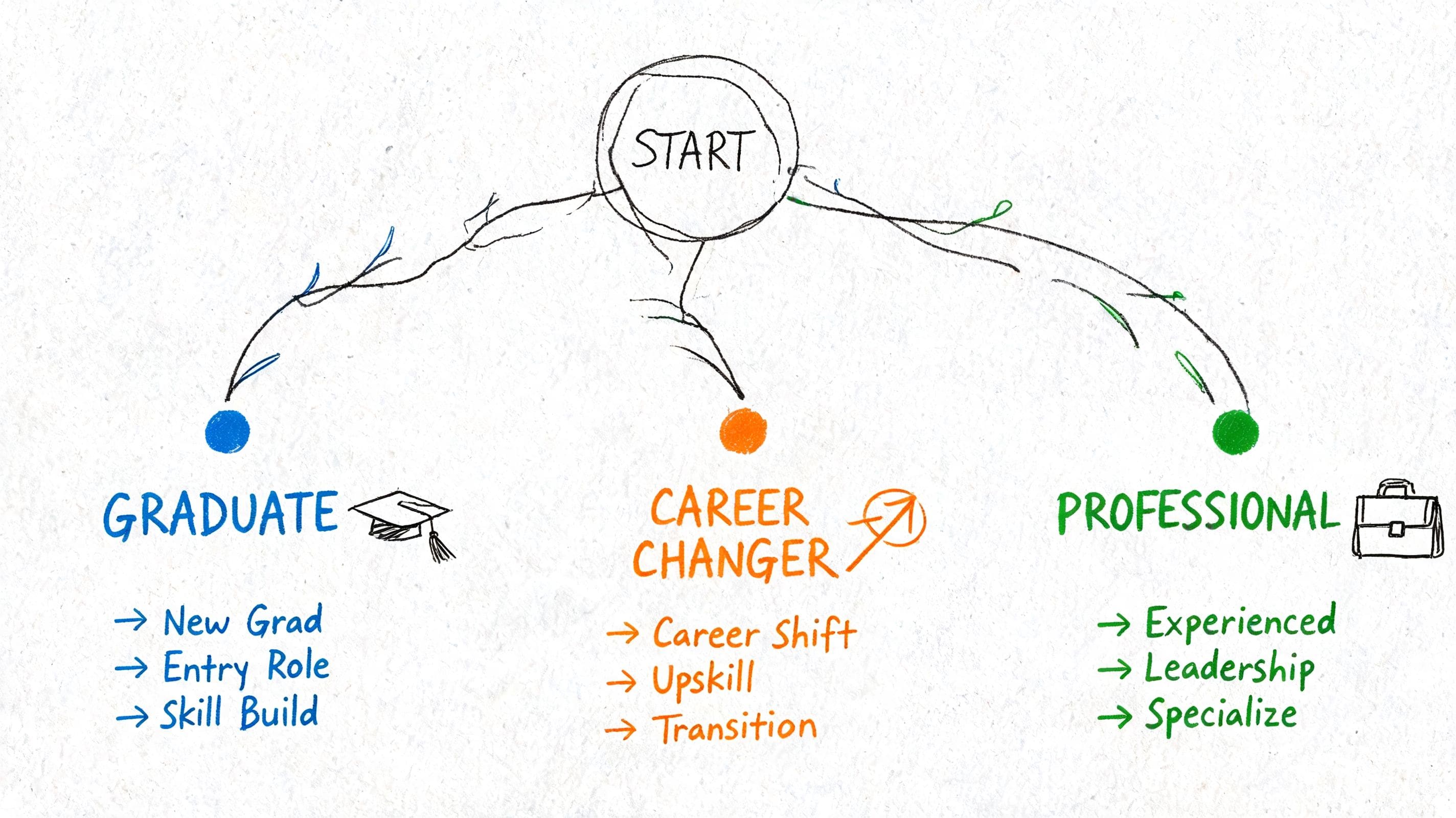
A graduate often has two problems at once. The first is writing a credible CV from limited experience. The second is applying to many roles without losing track of deadlines, versions, and application status.
For that profile, an integrated workflow is usually the better fit. The candidate needs structure more than fine-grained optimisation. They also benefit from guidance on keeping different versions organised for internships, graduate schemes, and entry-level jobs.
A broader guide to UK CV structure and expectations is often more useful at this stage than another score alone.
Career changer
Career changers sit in the middle. They often need help translating existing experience into new language, which is where rezi can be valuable. If the challenge is reframing management, customer-facing, or technical work so it reads credibly for a new sector, a specialist editor can speed that up.
But there's a limit. Career changers also tend to test several directions at once. One week might involve operations roles, the next project support, the next public sector applications. In that situation, a workflow system becomes more useful because it supports multiple customized versions without forcing the whole process into separate files and notes.
- Choose rezi first if the main obstacle is wording transferable experience convincingly.
- Choose a workflow-led platform first if the main obstacle is managing several role directions at once.
Experienced professional
An experienced professional usually doesn't need help starting from zero. The issue is time. There may be one high-stakes role, one internal move, or a short list of selective applications.
That's where rezi often fits best. Its specialist focus helps compress the editing process. The candidate can take an existing CV, compare it to the target role, and strengthen the language around the most important criteria.
For high-stakes applications, deeper optimisation often matters more than broader organisation.
Still, that only holds if the search is narrow. If the applicant is running a wider campaign across several employers, the administrative side comes back quickly. Then the stronger choice is the one that reduces friction across the whole search, not just inside one document.
The Final Verdict: When to Choose Rezi or CV Anywhere
The right choice depends less on features and more on where the friction is in the job search.
Choose rezi if:
- One target role matters most: The candidate is optimising for a specific application, not running a broad search.
- Content quality is the bottleneck: They need stronger bullet points, tighter summaries, and clearer alignment with a job description.
- ATS-specific guidance matters more than workflow: They want structured keyword prioritisation and a specialist editing environment.
- They already have their own tracking system: Notes, deadlines, and follow-ups are already under control elsewhere.
Choose CV Anywhere if:
- The search involves multiple applications: The candidate needs to build, tailor, and track several versions without losing oversight.
- Process is the bigger problem than writing: Spreadsheets, duplicate drafts, and missed follow-ups are slowing things down.
- They want one workspace, not separate tools: CV building, fit checking, and application tracking belong together.
- They need consistency across a longer search: The goal is repeatable, organised applications rather than one highly tuned CV.
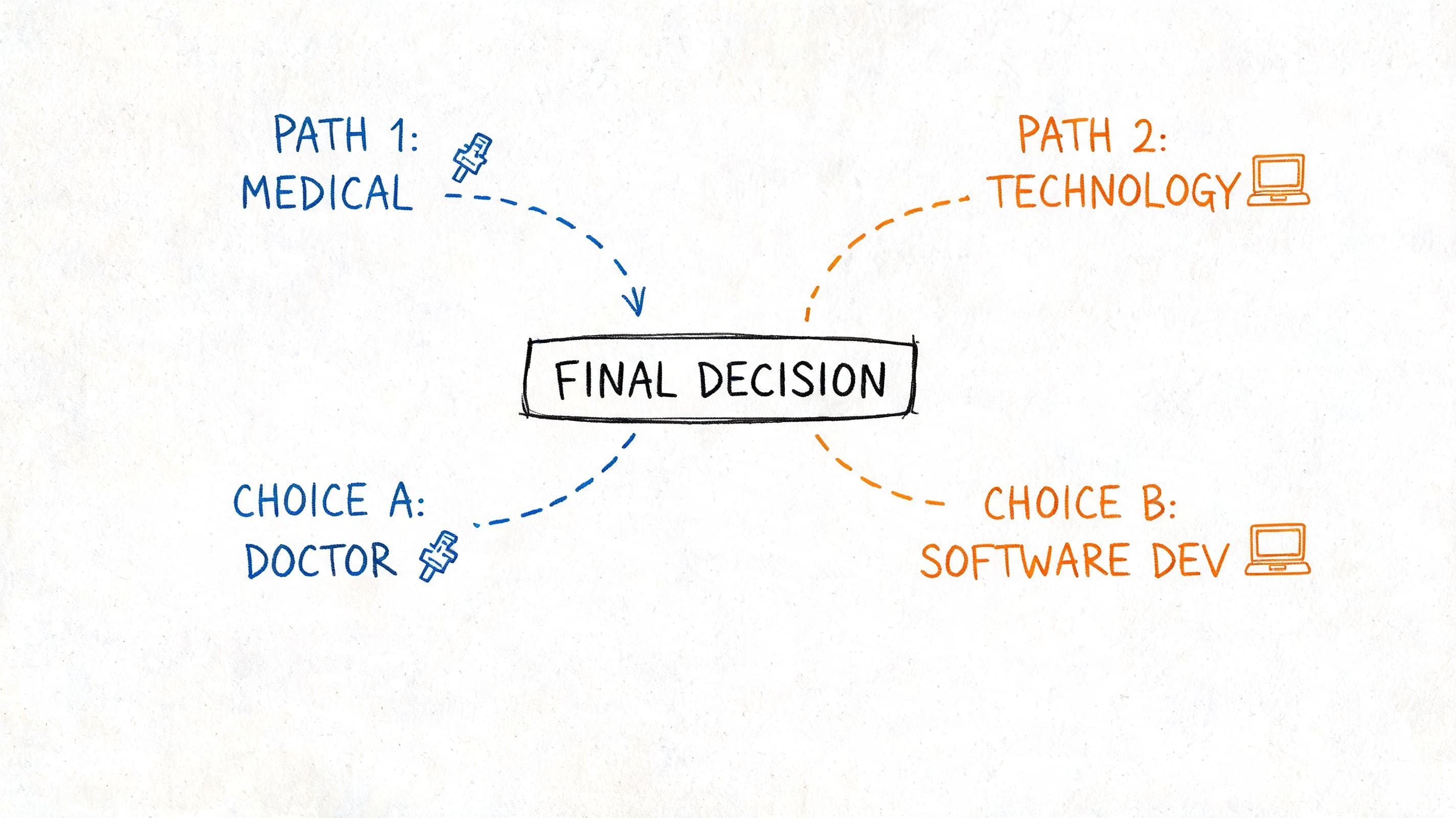
There isn't much value in picking a specialist editor if the underlying problem is application chaos. There also isn't much value in using an all-in-one system if the CV itself still says the wrong things.
For most UK job seekers, the practical rule is simple. Pick rezi when document optimisation is the priority. Pick CV Anywhere when the whole application process needs structure.
Frequently Asked Questions
Is rezi the same as REZI stock
No. The search term causes confusion. Rezi is the private CV tool, while REZI is the stock ticker for Resideo Technologies, a US-listed industrial company, as shown on TradingView's REZI market page. For UK job seekers looking for CV help, the CV tool is the relevant one.
Does rezi work for UK CVs
Yes, but with a caveat. It can help with targeting, keyword prioritisation, and ATS-friendly structure. UK candidates still need to apply judgement about local expectations such as concise length, evidence-based bullet points, and clear right-to-work information where relevant.
Is rezi better than an all-in-one platform
Not automatically. Rezi is better at the specialist job it's designed for, which is improving a single CV around a target role. An all-in-one platform is better when the bigger issue is managing multiple applications, notes, and customized versions in one place.
How long does it take to build a CV in these tools
That depends on the starting point. Importing an existing CV is usually faster than starting from scratch. The primary time difference comes later. Specialist tools can speed up one round of optimisation, while integrated tools often save more time over several applications because they reduce repeated admin work.
Can these tools replace manual editing
No. They can shorten the drafting process and make tailoring more structured, but they can't fully replace judgement. UK employers still respond to relevance, evidence, and clarity. A candidate who accepts every AI suggestion without checking substance usually ends up with a weaker CV.
If the job search needs more than a CV editor, CV Anywhere is built to help candidates create customized CVs, check fit against job descriptions, and keep applications organised in one place.