Creating a Powerful Curriculum Vitae That Gets You Hired

22 min read

Build a job-winning curriculum vitae with our expert guide. Learn how to structure, format, and optimize your CV to pass ATS and land your dream role.

Creating a Powerful Curriculum Vitae That Gets You Hired

The simplest way to think about a curriculum vitae is that it's the full, exhaustive story of your professional and academic life. It's not a summary; it's the whole book. Unlike a punchy, one-page resume designed to grab attention, the goal of a curriculum vitae is to provide a deep, comprehensive look at everything you've accomplished—every publication, research project, teaching gig, and award. This guide will walk you through creating a powerful document that gets you hired.

What a Curriculum Vitae Is and When to Use It

Professional desk setup with open books, reading glasses and blue CURRICULUM VITAE sign for comprehensive CV preparation guide

Here's a handy analogy: a resume is the movie trailer. It's short, exciting, and cut specifically to get you interested in one particular role. A CV, on the other hand, is the full-length feature film, complete with every plot point, character arc, and scene from your career.

Because it's meant to be exhaustive, a CV doesn't really have a page limit. It's a living document that grows as your career does. An early-career academic might have a CV that's two or three pages, but it's not uncommon for a tenured professor's CV to stretch past 10 pages. The focus is on being thorough, not brief.

Curriculum Vitae vs Resume at a Glance

This table provides a side-by-side comparison to help you quickly decide if you need a Curriculum Vitae (CV) or a Resume for your application.

Characteristic Curriculum Vitae (CV) Resume
Length Comprehensive; can be multiple pages and grows with your career. Concise; typically one page, two at most for experienced pros.
Purpose To provide a full, detailed account of your academic and professional history. To provide a brief, targeted summary of your skills and experience.
Content Includes publications, research, presentations, grants, and teaching experience. Focuses on skills and work achievements relevant to a specific job.
Common Use Academia, scientific research, and medical fields. Most corporate and business job applications.
Geographic Norm Standard in academia in the U.S.; often used for all jobs in Europe & UK. The standard for most job applications in the U.S. and Canada.

Choosing the right document is the first step in making sure you're speaking the right language to the hiring committee or recruiter.

When Is a CV the Right Choice?

Whilst the resume is king in most corporate jobs in the United States and Canada, the curriculum vitae is non-negotiable in certain circles. You'll almost always need a CV if you're applying for roles in:

  • Academia: This covers teaching positions, research roles, and fellowships at universities.
  • Scientific Research: Applying for lab positions, grants, or jobs at research institutions requires a full list of your publications and projects.
  • Medicine: Doctors, surgeons, and medical researchers rely on CVs to document their entire clinical history, residencies, and published work.

In these fields, hiring committees need to see the full breadth and depth of your contributions to your discipline, and a CV is the only format that can deliver that level of detail.

International Job Applications

Things get a little trickier when you start looking for jobs abroad. Geography plays a huge role in what an employer expects to see, and the terms "CV" and "resume" can get confusing.

A common point of confusion is the international use of the term CV. Whilst in the U.S. it refers to a long academic document, in the UK and Europe, a "CV" is often the standard document for all job applications, similar to a U.S. resume but sometimes with more personal details.

For instance, if you apply for a marketing job in the United Kingdom, your "CV" will likely be a two-page summary of your work history—much closer to an American resume. To avoid a misstep, it's absolutely critical to research local hiring conventions.

For anyone exploring opportunities across the pond, taking a look at a complete guide to UK CVs is a great place to start. It breaks down the regional nuances you need to know. Bottom line: always do your homework on the country's specific expectations before you hit send.

Want a free CV review?

Get your free CV review

Upload your CV and get instant AI suggestions to improve your chances

AI-powered optimization
Real-time analytics
ATS-friendly templates
View Pricing
Join 10,000+ professionals

The Anatomy of a Winning Curriculum Vitae

Visual representation of curriculum vitae anatomy showing structured sections including Contact, Education and Publications for professional CV layout

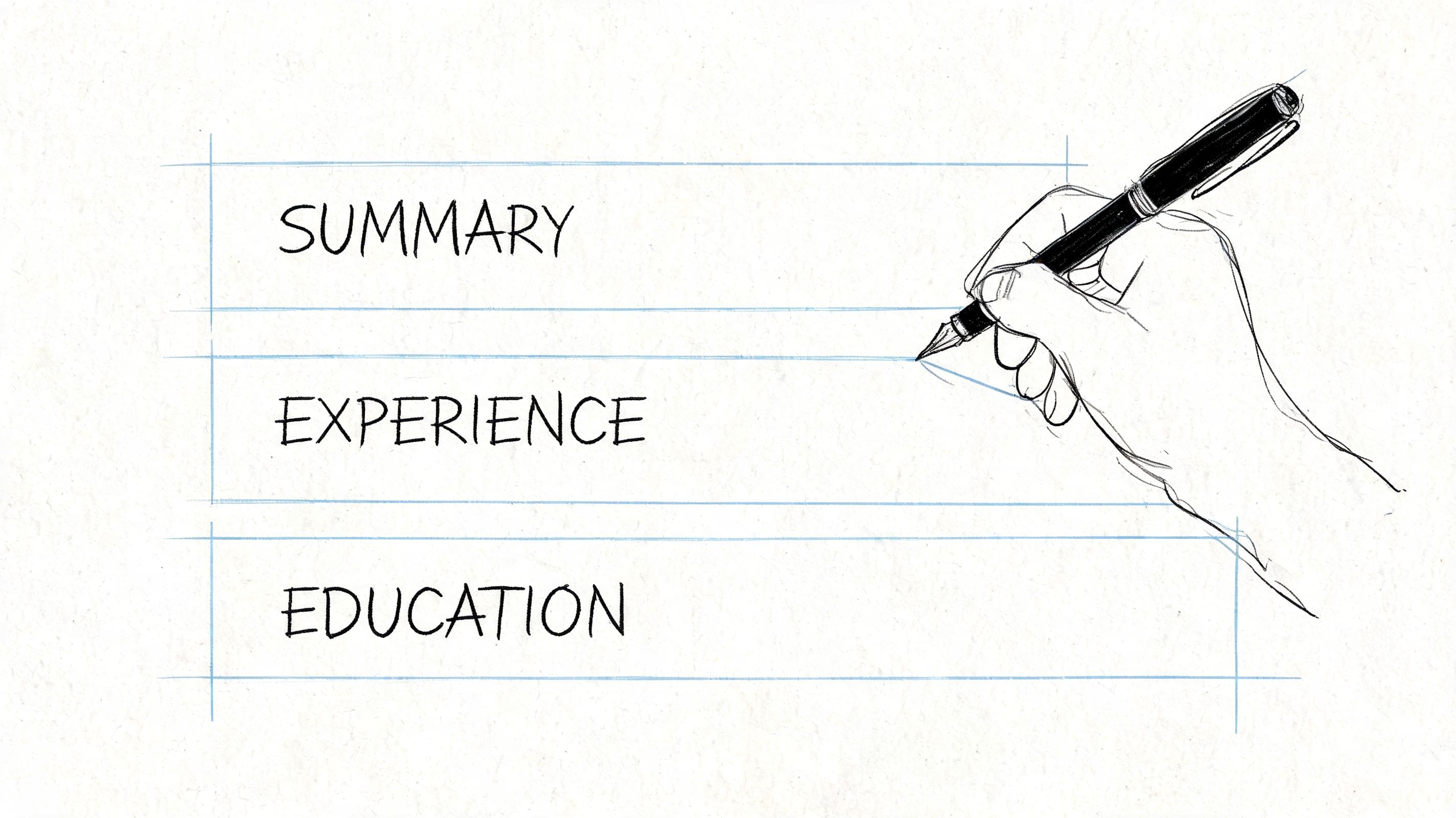
Putting together a powerful curriculum vitae is a bit like building a house. Each section is a room, and they all need to connect logically. Your contact information is the foundation—it has to be flawless. From there, you build the frame with a strong professional summary, educational history, and detailed experiences.

Every part has to work together to present a complete, impressive picture of your academic and professional life. This structure isn't just for show; it helps a hiring manager quickly navigate your qualifications and see exactly what you bring to the table. A messy, disorganised CV can bury your best work in a wall of text, causing a recruiter to miss the very things that make you a great fit.

The Essential Contact Information Block

This is the first thing anyone sees, and it needs to be perfect. One small typo here could mean they can't get in touch with you for an interview. Keep it clean, professional, and place it right at the top of the page.

Your contact block must always include:

  • Full Name: Make it the most prominent text on the page.
  • Professional Title: Your current role or academic standing (e.g., "Postdoctoral Research Fellow" or "Professor of History").
  • Phone Number: A number where you can actually be reached.
  • Email Address: Use a professional-sounding address, usually a version of your name.
  • Location: Your city, state, and country are generally all that's needed.
  • Professional Links: A link to your LinkedIn profile or personal academic website is a modern necessity.

Steer clear of personal details like your date of birth, marital status, or a photograph (unless it's standard practice in the country where you're applying). The focus should be strictly on your professional self.

Crafting a Compelling Professional Summary

Think of your professional summary as your elevator pitch. In just two or three sharp sentences, it needs to say who you are, what you're an expert in, and what kind of role you're looking for. It sits just below your contact details and sets the tone for everything that follows.

For instance, a summary might look like this:

"Dedicated molecular biologist with over eight years of experience in genetic sequencing and cellular research. Proven record of securing grant funding and publishing in peer-reviewed journals. Seeking a senior research position at a leading biomedical institution to contribute to advancements in oncology."

This quick intro gives the reader a clear snapshot of your background and goals before they dive into the nitty-gritty details.

Detailing Your Education and Qualifications

For any academic or research-focused curriculum vitae, the education section is critical and belongs near the top. You'll want to list your degrees in reverse chronological order, starting with the most recent one.

For each degree, be sure to include:

  • Name of the institution
  • Location of the institution
  • Degree obtained (e.g., Ph.D. in Astrophysics)
  • Dates of attendance or graduation year
  • Dissertation or thesis title (if it's relevant and impressive)

This section lays the academic groundwork for all the accomplishments that follow, so keep the formatting consistent and easy to scan.

Showcasing Your Professional and Research Experience

Here it is—the heart of your CV. This is where you map out your work history. Just like your education, list your jobs and appointments in reverse chronological order. For each position, state your title, the organisation, its location, and the dates you worked there.

Under each role, use bullet points to describe what you did, but more importantly, what you accomplished. Use numbers to back it up whenever you can. Instead of saying, "Managed a research team," try something like, "Led a team of 5 junior researchers on a 3-year project, resulting in 4 published articles." This turns a simple duty into a measurable success.

A well-structured experience section tells a story of your growth and impact. It should clearly show how you've put your skills to work in the real world, making a tangible difference in every role you've held.

Building this kind of detailed document from the ground up can feel like a huge task. To give yourself a running start with a solid structure, you can explore professional curriculum vitae templates. It provides the framework you need to organise your information logically and make sure you don't miss any key sections.

How to Beat the Applicant Tracking Systems

Person viewing laptop displaying webpage with articles next to blue binder labeled BEAT ATS for applicant tracking system optimisation strategies

Before a hiring manager ever lays eyes on your curriculum vitae, it has to get past a digital gatekeeper. This bouncer is called an Applicant Tracking System, or ATS, and its only job is to filter applications. The software scans for specific keywords and qualifications that line up with the job description. If your CV isn't built in a way the machine can read, it could be tossed aside before a human ever knows you applied.

And these systems are everywhere. By 2025, an incredible 97.8% of Fortune 500 companies will rely on an ATS to manage their hiring pipelines. The filtering is so aggressive that around 75% of CVs are rejected on the spot, usually because of simple formatting errors or missing keywords. Getting your document past this first hurdle isn't just a good idea—it's essential.

Decoding the Job Description for Keywords

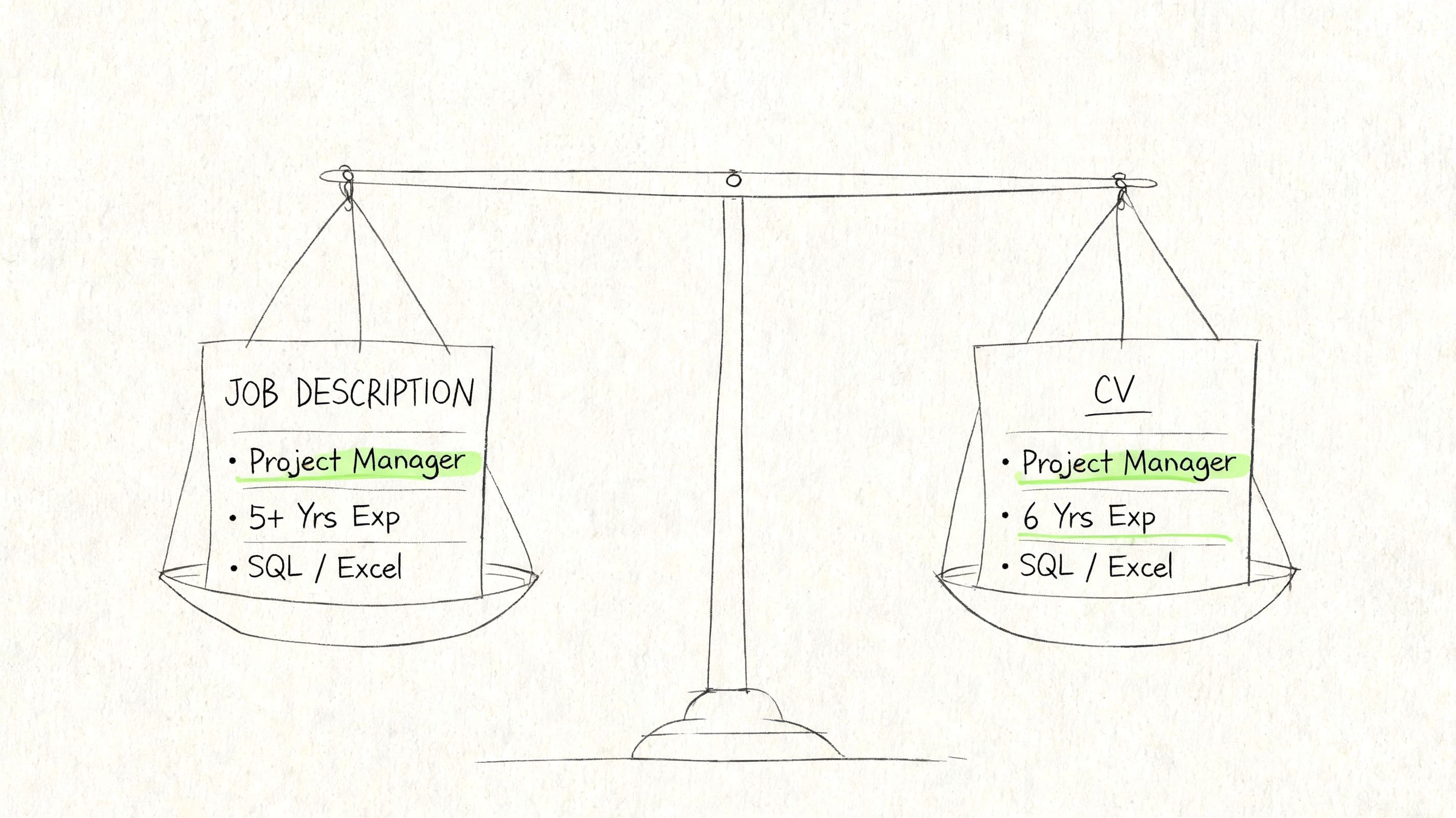
The first rule of beating the bot is to speak its language. The ATS is programmed to hunt for specific words and phrases that have been pulled straight from the job description. Your mission is to find those keywords and weave them naturally into your own CV.

Think of it like this: the ATS is "searching" your curriculum vitae for evidence that you're a perfect match.

Here's how to do it right:

  1. Break Down the Job Post: Zero in on the "Requirements," "Qualifications," and "Responsibilities" sections. This is where the gold is hidden.
  2. Pull Out the Key Terms: Make a list of the words that keep showing up. Pay close attention to hard skills like "Python," "data analysis," or "project management," along with any industry-specific jargon.
  3. Integrate Them Naturally: Sprinkle these keywords throughout your professional summary, work experience, and skills sections. Don't just stuff them in a list; embed them in the context of your accomplishments.

This simple process aligns what you've written with what the software is looking for, dramatically boosting your chances of making it to the next round.

Formatting Your CV for Readability

A creative, visually stunning CV might look great to you, but it often confuses an ATS. The software is designed to understand clean, simple, predictable layouts. Anything fancy—like columns, tables, or complex headers and footers—can cause the system to misread or completely jumble your information.

Stick to these formatting rules for a bot-friendly document:

  • Use Standard Fonts: Classics like Arial, Calibri, or Times New Roman are always a safe bet.
  • Keep Headings Simple: Use standard, predictable headings like "Work Experience" and "Education." Avoid creative alternatives like "My Professional Journey."
  • Ditch Graphics and Images: The ATS can't read logos, charts, or photos. Leave them out.
  • Save as .docx or .pdf: These are the most universally accepted and readable file types for these systems.

The goal isn't to impress the robot with your design skills—it's to create a logical, cleanly structured document it can understand. Prioritise clarity over flair to make sure every part of your experience gets parsed correctly.

This straightforward approach ensures the system can easily pull out your contact info, work history, and skills without hitting any roadblocks. To get a better handle on how technology is shaping hiring, it's worth exploring how AI hiring and intelligent assessments are changing the game.

Common ATS Mistakes to Avoid

Even if you get the keywords and formatting right, a few small mistakes can still get your curriculum vitae kicked out of the running. Knowing what these common pitfalls are is half the battle.

One of the biggest culprits is using non-standard section titles. If the ATS is programmed to look for "Work Experience," your creative heading like "Where I've Made an Impact" will cause it to skip that entire section. Another common error is putting crucial details like your name or email in the header or footer, as most systems are built to ignore those areas completely.

To make sure you're not falling into these traps, check out this guide on the most common ATS CV mistakes. Steering clear of these simple errors ensures the full value of your experience is seen and understood.

Tailoring Your CV for Any Role or Industry

Flat lay desk setup featuring open curriculum vitae documents, laptop and professional accessories for job application preparation and CV customisation

Sending the same generic curriculum vitae for every single application is the fastest way to get your CV moved to the "no" pile. Don't do it. A far better approach is to think of your CV as a master document—a comprehensive record of your entire career that you strategically customise for each specific opportunity.

Tailoring your CV isn't about making up new experiences. It's about re-prioritising sections, shining a spotlight on your most relevant achievements, and tweaking your language to speak directly to what a hiring manager is looking for. This simple act of customisation proves you've done your homework and are genuinely invested, making your qualifications impossible to ignore.

For the Academic Applying for a Faculty Position

When you're aiming for a faculty position, your research and contributions to your field are everything. Your CV needs to reflect that, putting your most critical scholarly work front and centre where the hiring committee can't miss it.

For an academic audience, your curriculum vitae should follow a clear hierarchy:

  1. Education: Start with your terminal degree (your Ph.D., for instance) and the title of your dissertation.
  2. Publications: This is often the most heavily scrutinised section. List your peer-reviewed articles, book chapters, and any books you've authored or edited.
  3. Research Experience: Go into detail on your projects, the methodologies you used, and what you discovered.
  4. Teaching Experience: List the courses you've taught, any guest lectures you've given, and curriculum development work.
  5. Conference Presentations and Grants: Show how you've engaged with the academic community and your ability to secure funding.

Your professional summary should frame your research focus and teaching philosophy, drawing a direct line between your expertise and the department's specific strengths.

For the Recent Graduate Highlighting Potential

As a new graduate, your CV is all about selling potential. With limited professional history, your job is to strategically highlight academic wins, relevant projects, and the transferable skills that prove you're ready to contribute from day one.

You need to show what you can do, not just what you have done.

A recent graduate's CV is a forward-looking document. It uses academic projects, internships, and even ambitious coursework to build a compelling argument for their future success and trainability in a professional environment.

Flip your sections to put your strengths first. Open with a sharp objective or summary that clearly states your career goals and genuine enthusiasm. Your Education section should be detailed, including relevant coursework, your GPA (if it's impressive), and any academic honours. It's also a great idea to create a dedicated "Projects" section to feature work that shows off your practical skills.

For the Seasoned Corporate Professional

Once you're an experienced professional, your track record of delivering results is your most valuable currency. Your CV must immediately broadcast your impact and leadership, shifting the focus from your education to your recent work history.

Kick things off with a powerful professional summary that highlights your years of experience and a major career win. Your "Professional Experience" section should come right after, packed with quantifiable achievements. For instance, don't just say, "Managed marketing campaigns." Instead, lead with the result: "Managed a £500k marketing budget, increasing lead generation by 45% in one year."

Your education can be moved much further down the document. Here, the entire focus is on proven, real-world impact. For more inspiration, check out some professional curriculum vitae examples to see how others have framed their corporate experience.

For the Career Changer Emphasising Transferable Skills

Pivoting to a new industry requires a completely different playbook. Your CV has to build a convincing bridge from where you've been to where you want to go. The key is to shift the focus from job titles to the transferable skills that are most relevant to your new field.

A functional or combination CV format works wonders here. Create skill-based sections near the top, like "Project Management," "Data Analysis," or "Client Relations." Under each heading, pull bullet points from your past jobs that prove your expertise in that specific area.

This skills-first approach is becoming more critical as hiring evolves, with a growing movement towards emphasising skills over traditional degrees. This lets you reframe your entire career story around your capabilities, not just a linear path. The market is already reflecting this shift, with 65% of employers globally set to prioritise skills over formal education by 2025.

Advanced Tips to Make Your CV Stand Out

You've got the structure down and the content is tailored. Now for the fun part: adding the professional polish that makes a recruiter stop scrolling. These are the little details that separate a CV that gets a call from one that gets archived.

It's about showing you're meticulous, professional, and you respect the recruiter's time. Think of it this way: in some major US cities, a single job post pulls in over 150 applicants. In a global hub like Dubai, that number can jump to 285 per LinkedIn ad. With US applications per hire surging by 182% since 2021, you have to assume the hiring manager is overwhelmed.

Your CV has seconds, not minutes, to make an impact. These tips will help you do just that.

Quantify Your Achievements with Data

This is the single most powerful way to make your experience jump off the page. Stop describing your duties and start proving your results. Numbers cut through the noise and provide concrete proof of the value you bring.

Which of these sounds more impressive?

  • Vague: "Managed the department's social media accounts and grew the audience."
  • Quantified: "Grew social media engagement by 35% across three platforms in six months, adding 15,000 new followers."

The second one isn't just a statement; it's a story of achievement. It transforms you from someone who just did a job into someone who delivered real, measurable impact. If you need more inspiration, check out these examples of accomplishments for your resume to get the ideas flowing.

Use Strong Action Verbs

The words you choose matter. Starting every bullet point with a powerful action verb makes you sound confident and proactive. Words like "negotiated," "launched," "engineered," or "streamlined" carry much more weight than passive phrases like "was responsible for."

Action verbs paint a picture of you as a doer—someone who takes initiative and drives results, not just a person who follows a list of instructions.

Go through your CV right now and hunt down any weak openings. Swapping out a passive phrase for a dynamic verb is a small change that completely reframes how a recruiter sees your contributions.

Embrace Clean Design and Readability

Great design should be invisible. The goal isn't to create a work of art (unless you're a designer, of course). The goal is to make your CV ridiculously easy to read. A cluttered, dense document is a headache for a recruiter who has 100 more to get through.

Stick to these simple rules:

  • Let It Breathe: Use plenty of white space. Good margins and line spacing prevent the dreaded "wall of text" and make your CV scannable.
  • Pick a Pro Font: Stick with classics like Calibri, Arial, or Georgia. Keep the size between 10 and 12 points.
  • Stay Consistent: Your formatting for headings, dates, and bullet points must be the same from top to bottom. No exceptions.

A clean, organised layout helps the recruiter find what they're looking for fast. Don't make them work for it.

Final Polish and Proofreading

Don't sabotage all your hard work with a sloppy mistake at the finish line. A single typo can signal a lack of attention to detail, which is a red flag for any role.

After you think you're done, proofread it. Then proofread it again. Read it out loud to catch awkward phrasing. Even better, have a friend or colleague give it a once-over—a fresh set of eyes will spot things you've been staring at for hours.

And one last thing: have your references ready in a separate document, but only send them when you're asked. Unless the job description says otherwise, assume you'll need a cover letter, too. These finishing touches complete your professional package and leave a killer first impression.

Your Curriculum Vitae Questions Answered

Even after you've nailed the structure and tailored the content of your curriculum vitae, a few nagging questions always seem to pop up. Getting straight answers to these common sticking points can give you that final shot of confidence before you hit "send." This section tackles the most frequent questions I hear, from page length debates to the strategic (and often risky) use of photos.

Think of this as the final polish on your professional story. Answering these questions correctly ensures your CV meets the unwritten rules of specific industries and cultures, helping you avoid small mistakes that could distract a hiring manager from what really matters—your qualifications.

How Long Should a Curriculum Vitae Be?

Unlike a resume, a curriculum vitae doesn't have a strict page limit. Its length is dictated by one thing: the depth of your experience. The goal here is to be comprehensive, not artificially brief.

For someone just finishing their Ph.D. or in the early stages of an academic career, a CV might naturally land somewhere between two and four pages. On the other hand, a senior professor with decades of research, publications, grants, and speaking engagements could easily have a CV that runs over 10 pages. Your CV should be as long as it needs to be to tell your full academic and professional story, without padding it with irrelevant filler. Focus on being complete.

Should I Put a Photo on My Curriculum Vitae?

This one is all about geography. The answer depends entirely on the local hiring customs of the country where you're applying.

In places like the United States, the United Kingdom, and Canada, you should never include a photo. The practice is seen as unprofessional and opens the door to unconscious bias in the hiring process, something most companies actively work to prevent.

However, the complete opposite is true in many other parts of the world.

  • In many European countries, like Germany and France, a professional headshot is not just common but expected.
  • It's also standard practice across much of Asia and the Middle East.

The golden rule is this: always research the hiring conventions for the specific country you're applying to. When in doubt, it is always safer to leave the photo out. Let your accomplishments speak for themselves.

This simple check can be the difference between looking like a savvy applicant and an out-of-touch one.

What Are the Most Common CV Mistakes to Avoid?

Beyond the big-picture stuff, a few common slip-ups can quickly sink an otherwise strong curriculum vitae. Dodging these is non-negotiable if you want to make a great first impression.

The most damaging mistakes usually fall into three buckets:

  1. Typos and Grammatical Errors: This is the number one reason applications get tossed. It screams a lack of attention to detail. Proofread your document. Then proofread it again. Then have someone else proofread it.
  2. Sending a Generic Document: If your CV isn't tailored to the specific role, it shows you aren't that interested. A customised document that speaks directly to the job description will always beat a generic one, every single time.
  3. Poor, ATS-Unfriendly Formatting: Using fancy columns, graphics, or weird fonts might look cool, but it can make Applicant Tracking Systems garble your information. Your CV could get rejected by the software before a human ever lays eyes on it.

Is a Creative CV Format a Good Idea?

For the vast majority of fields—academia, science, medicine, and most traditional corporate roles—the answer is a hard no. In these worlds, recruiters and hiring committees expect a standard, predictable layout they can scan quickly for key information. Don't make them work for it.

The exception? Creative industries. If you're in graphic design, marketing, or advertising, a visually unique CV can double as a mini-portfolio, showcasing your design chops from the get-go. But even if you go this route, make sure it's still easy to read. And always have a plain-text version ready for those stubborn online application portals that use ATS.


Ready to build a CV that opens doors? The CV Anywhere Smart CV Builder helps you create a polished, ATS-friendly document with AI-enhanced summaries and skill alignment. Try it for free and land your next interview.

Tags

curriculum vitaeCV writingacademic CVCV formatjob applicationATS optimisation

Related Articles

The Only CV UK Template You'll Ever Need

A solid cv uk template is the bedrock of any successful job hunt in the UK. Think of it less as a fill-in-the-blanks document and more as a professional, recruiter-approved framework. The right one en...

Read more →

Popular Articles

1
The Only CV UK Template You'll Ever Need

A solid cv uk template is the bedrock of any successful job hunt in the UK. Think of it less as a fill-in-the-blanks document and more as a professional, recruiter-approved framework. The right one en...

2
Creating a Powerful Curriculum Vitae That Gets You Hired

The simplest way to think about a curriculum vitae is that it's the full, exhaustive story of your professional and academic life. It's not a summary; it's the whole book. Unlike a punchy, one-page re...

3
8 Critical ATS CV Mistakes to Avoid in 2025

Applicant Tracking Systems (ATS) are the gatekeepers of modern recruitment. To ensure your application makes it to a human, you must avoid the most common ats cv mistakes that cause these systems to m...

4
A Guide to US Resume Formatting Rules

Following the correct US resume formatting rules is the first step toward impressing American hiring managers. It's about presenting your career story in a clean, scannable way that recruiters—and the...

5
Job Application Tracking Spreadsheet: Build Your System to Land More Interviews

A powerful job application tracking spreadsheet is your secret weapon, turning the chaos of a job hunt into a strategic, organised campaign. Think of it less as a simple list and more as a dynamic com...