Your first CV does not need a job history to work. It needs proof that you can do useful work.
For first-time applicants, the strongest material often comes from school projects, coursework, volunteering, extracurricular roles, and part-time responsibilities that other candidates leave out or describe too vaguely. A group presentation can become evidence of research, communication, and deadline management. A volunteer shift can show customer service, organisation, or cash handling. The difference is how clearly you translate that experience into outcomes a recruiter can recognise.
A strong first CV is focused, readable, and specific. It shows what you did, how you did it, and what came out of it. That is also what helps with hiring software later, but the primary task at this stage is simpler: turn raw experience into evidence.
I tell first-time job seekers to stop asking, "Do I have enough experience?" and start asking, "Which examples prove I can learn fast, contribute, and follow through?" That change usually improves the CV immediately.
If you want a clearer sense of which layout supports that evidence best, this guide to resume format choices is a useful place to start. Tools such as CV Anywhere can then help check whether those project, volunteer, and academic examples are written in a way recruiters and screening systems can read.
Choosing Your CV Format and Structure
Your first decision is format. Make the right one and your CV is easier for both recruiters and software to read. Make the wrong one and even good content can get buried.
For most first-time job seekers, a simple reverse-chronological structure is the safest option. Recruiters are used to it, and ATS software handles it more reliably than creative layouts or heavily designed templates. If you want a deeper breakdown of format options, this guide to resume format choices is a useful companion.
The two formats worth considering
You'll usually see two realistic choices for a first CV:
| Feature | Reverse-Chronological CV | Functional (Skills-Based) CV |
|---|---|---|
| What it leads with | Most recent education and experience | Skills grouped by theme |
| Best for | Students, graduates, school leavers with projects, volunteering, part-time work | People with very limited formal history or unusual backgrounds |
| Recruiter familiarity | High | Mixed |
| ATS readability | Usually stronger | Can be less straightforward |
| Strength | Clear timeline and easy scanning | Lets you foreground strengths fast |
| Weakness | Can feel thin if you only list titles | Can look vague if skills aren't backed by evidence |
A lot of first-time applicants assume a functional CV is the obvious choice because they don't have much job history. Sometimes it is. But in practice, it often creates another problem. It hides context.
Recruiters don't just want to see that you have "teamwork" or "communication". They want to know where those skills came from. A reverse-chronological CV still lets you highlight skills, but it ties them to school projects, volunteering, societies, placements, and part-time work.
Practical rule: If you can name where you used a skill, you probably have enough material for a standard first CV.
The structure that works
For a UK first CV, keep the layout straightforward:
- Contact details
- Personal statement
- Key skills
- Education
- Experience (part-time work, volunteering, placements, projects)
- Additional information (certifications, interests, languages if relevant)
That order works because it puts your strongest early-career material near the top. If you're still studying or recently finished, education usually deserves more space than work history.
Presentation rules that help, not hurt
The safest design choices are also the most effective:
- Keep it to one page if you're writing your first CV.
- Use A4 layout with Arial or Calibri in size 11 to 12.
- Use bold headings, standard section titles, and consistent spacing.
- Avoid colours, icons, graphics, columns, and text boxes.
- Export as PDF unless an employer asks for another file type.
A first CV doesn't need to look "creative". It needs to look clear, professional, and easy to scan. Fancy templates often impress the person writing them more than the person reading them.
If you're stuck, choose boring over clever. Boring gets read.
Build a CV that actually gets interviews
Start from your current CV — or from scratch — with step-by-step guidance so you do not get stuck.
Free. No blank page. No templates to wrestle with.
Building the Core Sections of Your First CV
Once the structure is set, the job becomes simpler. Build each section with a clear purpose. Every line should answer one of two questions: who are you, and why are you relevant for this role?
For a more detailed breakdown of what each block should contain, see this guide to the core components of a resume.
Contact details
This section should be clean and minimal. Don't overcomplicate it.
Include:
- Full name as the largest text on the page
- Mobile number you can be reached on
- Professional email address based on your name
- Town or city in the UK
- LinkedIn profile only if it's up to date
Leave out your full address, date of birth, marital status, and a photo. For UK applications, a photo is usually unnecessary and can create distraction rather than value.
A professional email address matters more than people think. If your current one sounds like a gaming handle or an old school nickname, replace it.
Personal statement
Many first CVs go wrong because people either write nothing useful, or they write a long paragraph full of claims they can't support.
Your personal statement should be 4 to 6 lines. It should show current status, relevant strengths, and the role you're targeting. The National Careers Service advice on CV sections recommends this kind of potential-focused summary, and notes that optimised summaries can increase ATS pass-through rates by up to 62%.
Use this formula:
[Who you are now] + [your strongest relevant skills with brief evidence] + [the type of role you want and why you fit it]
Example:
Final-year Business Management student with strong communication, organisation, and customer service skills developed through group projects, retail work, and volunteer events. Experienced in coordinating tasks, meeting deadlines, and working effectively with others. Seeking an entry-level admin role where I can apply these skills in a fast-paced team.
Another example for a technical role:
Recent Computer Science graduate with hands-on experience from academic projects in Python, data analysis, and teamwork-based software development. Comfortable presenting findings, solving practical problems, and learning new tools quickly. Seeking a junior analyst role where I can contribute structured thinking and technical curiosity.
Key skills
This section is not a dumping ground for buzzwords. If you list a skill, you should be able to point to where you used it.
Good first-CV skills often include:
- Communication from presentations, debating, customer-facing work
- Teamwork from group assignments, clubs, sport, volunteering
- Organisation from balancing study, work, and deadlines
- Problem-solving from projects, coursework, event planning
- Digital skills from software, spreadsheets, coding, design tools
Keep this section targeted. Read the job description and mirror its language where it truthfully applies to you.
Education
For first-time applicants, education often carries a lot of weight. Put it high on the page and give it substance.
For each entry, include:
- Qualification name
- School, college, or university
- Dates
- Expected or completed grades if appropriate
- Relevant modules
- Projects or coursework linked to the role
Now, you start turning study into evidence. Don't stop at the qualification title.
Instead of:
- BA History, University of York
Write:
- BA History, University of York
- Relevant modules: Research Methods, Public Policy, Modern Political Communication
- Dissertation project on media messaging and audience analysis
- Delivered written and presentation-based work under tight deadlines
That makes your education section do some of the work your experience section may not yet be able to do.
Experience
You may not have "proper" experience in the way you imagine it. That's fine. Include any of the following if they're relevant:
- Part-time jobs
- Volunteering
- Work shadowing
- Placements
- Student society roles
- Major academic projects
Use a consistent format:
Role title
Organisation
Dates
Then add bullets focused on actions and outcomes, not vague duties.
Additional information
Only include extra sections if they add real value.
This can include:
- Certifications relevant to the role
- Languages
- Interests that show discipline, leadership, or communication
Good interests are specific. "Reading and music" says almost nothing. "Captain of university netball team" says much more.
A first CV is strongest when every section earns its place. If something doesn't help an employer understand your fit, cut it.
How to Write Bullet Points That Show Your Value
A weak first CV usually fails in one place. The bullet points sound like a list of duties with no evidence behind them.
That's why this part matters. Bullet points are where employers decide whether your experience means anything.
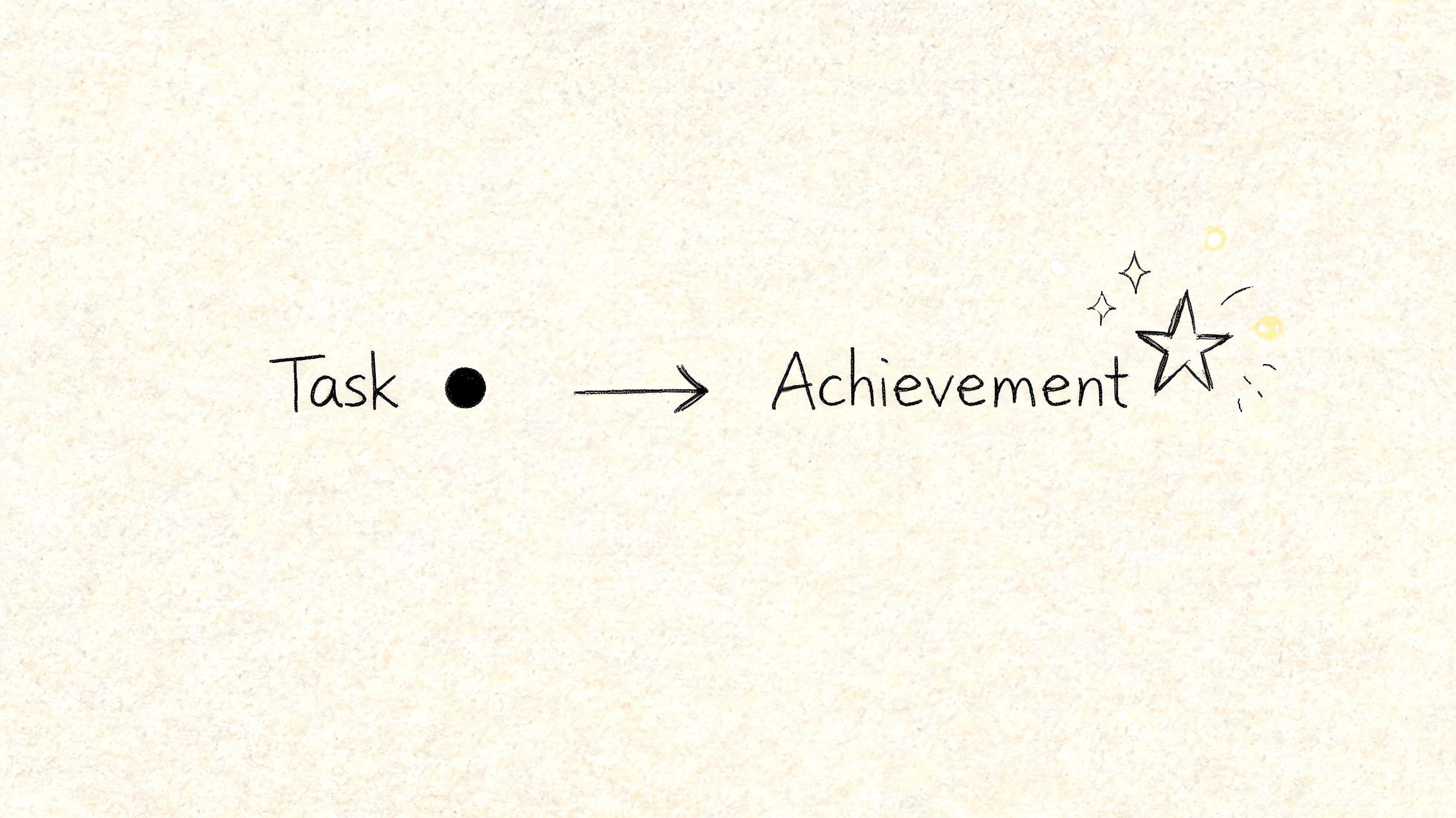
A useful way to write stronger bullets is to borrow from STAR. Situation, Task, Action, Result. You don't need to spell those labels out on the CV. Just use the logic behind them.
For more examples of this style, review these resume bullet point examples.
Before and after examples
Here's how weak bullets become credible ones.
Group project
Before:
- Helped with a university marketing project
After:
- Collaborated in a team project to research customer behaviour, present recommendations, and deliver a structured final report for assessment
Volunteering
Before:
- Volunteered at a charity shop
After:
- Supported day-to-day shop operations, assisted customers, sorted donated stock, and worked with volunteers to keep displays organised
Part-time café role
Before:
- Served food and drinks
After:
- Served customers in a busy café environment, handled orders accurately, and maintained a calm, polite approach during peak periods
None of those stronger versions make anything up. They describe the work properly.
Add proof where you genuinely have it
Quantifying experience is powerful when the number is real and you can stand behind it. The point isn't to force numbers into every bullet. The point is to show scale, scope, or outcome where possible.
Good sources of proof include:
- Team size
- Number of events organised
- Project grade
- Hours volunteered
- Software used
- Type of output produced
Example upgrades:
- Weak: Took part in coding coursework
Stronger: Built a Python coursework project that solved a practical data analysis task and presented findings clearly
- Weak: Was captain of a sports team
- Stronger: Led a student sports team, organised fixtures, and supported coordination across training and match-day responsibilities
Avoid the keyword trap
Many first-time CV writers are told to "add keywords", then end up stuffing phrases into the page with no flow. That creates what Indeed describes as a keyword-to-narrative mismatch in its sample resume advice for people with no job history. The fix is simple. Don't just list keywords. Build them into achievements.
If a job description mentions customer service, teamwork, and problem-solving, don't write:
- Customer service
- Teamwork
- Problem-solving
Write:
- Resolved customer queries in a front-of-house setting and worked closely with colleagues to keep service running smoothly
That sounds human and still matches the role.
Use the employer's language where it fits. Don't copy chunks of the job advert into your CV and hope it looks convincing.
This is also one place where a tool can help. CV Anywhere's JD Fit Checker analyses a job description and shows where your wording aligns or where important skill language is missing, which is useful when you want your bullet points to read naturally rather than mechanically.
Making Your CV Pass the Applicant Tracking System Test
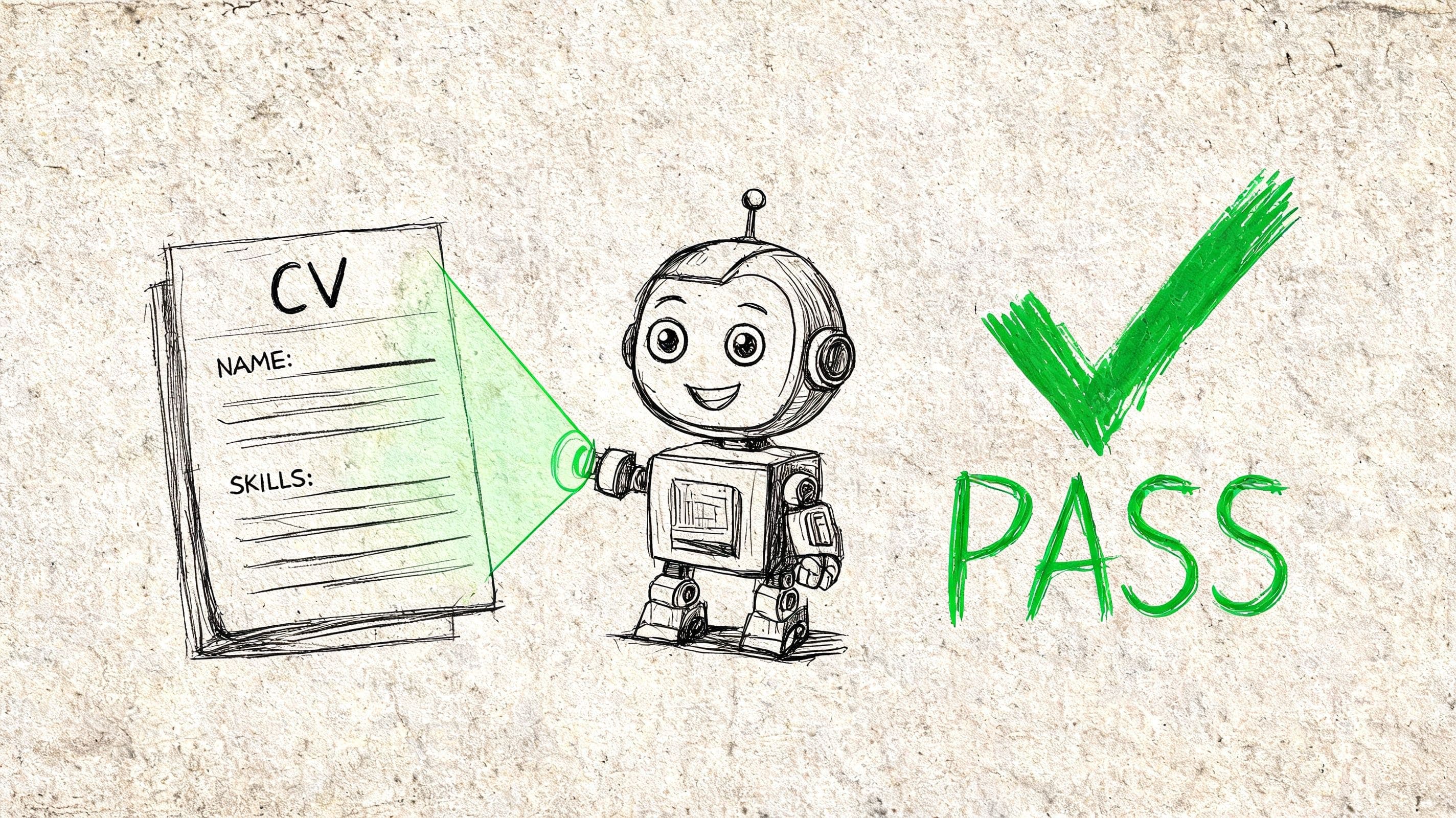
An ATS does not care that this is your first CV. It checks whether your file is easy to read, clearly structured, and relevant to the role.
That matters because many first-time applicants lose ground before a recruiter even sees their application. The problem is usually not a lack of potential. It is poor formatting, vague headings, or missing job-specific language.
If you want a fuller walkthrough, this guide on how to optimize a resume for ATS explains the technical checks in more detail.
What ATS software usually misses
ATS software reads text by parsing the document into sections. Clean layouts help. Decorative layouts often get in the way.
Avoid:
- Tables and columns that split content into separate visual areas
- Text boxes that can hide information from the parser
- Icons and graphics in place of words like phone, email, or skills
- Creative headings such as "What I Bring" instead of "Skills" or "Work Experience"
- Heavy templates with layered formatting
A simple CV often performs better than a stylish one. Recruiters care far more about readable evidence than design tricks.
The checks that make a real difference
Use this pre-submission test:
- Stick to standard headings such as Personal Statement, Education, Experience, Skills
- Use a single-column layout
- Choose plain fonts such as Arial, Calibri, or Times New Roman
- Match the job description's language where it accurately reflects your background
- Write bullet points in plain sentences, not fragments stuffed with keywords
- Save the file in the format the employer asks for
- Use a professional file name, such as Firstname-Surname-CV.pdf
Keyword matching matters, but accuracy matters more. If the advert asks for communication, research, Excel, customer service, or teamwork, include those terms only where you can prove them through coursework, volunteering, society roles, or part-time work.
For example, a first-time applicant should not drop in "project management" because it sounds strong. It is better to write: "Coordinated a four-person university project, assigned tasks, tracked deadlines, and presented findings to a tutor." That gives the ATS a relevant phrase and gives the recruiter evidence.
If you are unsure which terms employers repeat across similar roles, ReachLabs.ai's keyword research guide is a useful reference point.
Use AI to check fit, not to fake it
AI tools are helpful at the review stage. They are less helpful when they write generic claims you cannot defend.
A better use of AI is validation. CV Anywhere's JD Fit Checker compares your CV against a job description and flags where your wording lines up, where relevant terms are missing, and whether your academic projects or volunteering are being described in language an ATS can recognise. That is especially useful on a first CV, because relevant experience often exists on the page already. It just needs clearer wording.
Plain formatting gives your CV a fair chance. Specific, ATS-friendly evidence gets it through the first screen.
Translating No Experience into Relevant Experience
The phrase "I have no experience" is usually inaccurate. What most first-time applicants mean is "I haven't had a full-time professional job yet".
Those are not the same thing.
If you've completed coursework, contributed to group projects, worked part-time, volunteered, organised events, captained a team, helped run a society, or taught yourself a tool, you have experience. The key skill is learning how to frame it.
For graduates, a skills-first CV format can boost interview callbacks by 40%, according to Youth Employment UK's advice on writing a first CV. That's why a visible Key Skills section matters when your career history is still short.
Where your evidence actually comes from
Relevant experience often hides in plain sight. Look in these places:
- Academic projects that show research, analysis, teamwork, writing, presentation, or technical skills
- Volunteering that shows reliability, service, organisation, or responsibility
- Part-time work that proves punctuality, customer interaction, pressure handling, and teamwork
- Clubs and societies that show initiative, planning, communication, or leadership
- Independent learning such as certifications, coding practice, design work, or portfolio projects
A first-time applicant for an admin role might think a university event committee has nothing to do with office work. It often has plenty to do with it. Planning meetings, coordinating people, handling deadlines, and communicating clearly are all directly relevant.
Pull skills from the job description first
Don't start with your life story. Start with the job advert.
Identify 5 to 8 core competencies the employer cares about, then match your own experience to them. If you need help spotting the right terms, ReachLabs.ai's keyword research guide is a useful primer on how to find and prioritise the language people use in search and job-market contexts. The same logic applies when reading job descriptions.
Then translate your background into those skills.
For example:
| Job requirement | Your source of evidence |
|---|---|
| Communication | Presentations, retail work, debate club |
| Teamwork | Group assignments, sport, volunteering |
| Organisation | Coursework deadlines, event planning, shift balancing |
| Problem-solving | Academic research, troubleshooting in part-time work |
| Leadership | Society role, team captaincy, peer mentoring |
Reframing examples that work
Instead of saying:
- No office experience
Say:
- Coordinated group deadlines, produced written work to schedule, and communicated clearly across team-based academic projects
Instead of:
- Only worked in hospitality
Say:
- Built customer service, teamwork, and time-management skills in a fast-paced environment with constant public interaction
Instead of:
- Just volunteered
Say:
- Took responsibility in a community setting, worked with others, and delivered practical support consistently
If you need more examples of how to shape this into a proper application document, this guide to writing a resume with no experience is a sensible next read.
Common First-Time CV Mistakes to Avoid
A lot of first CVs fail for fixable reasons. Not because the candidate lacks potential, but because the document looks rushed, vague, or underconfident.
That's good news, because these are easy to catch before you apply.
The mistakes that hurt most
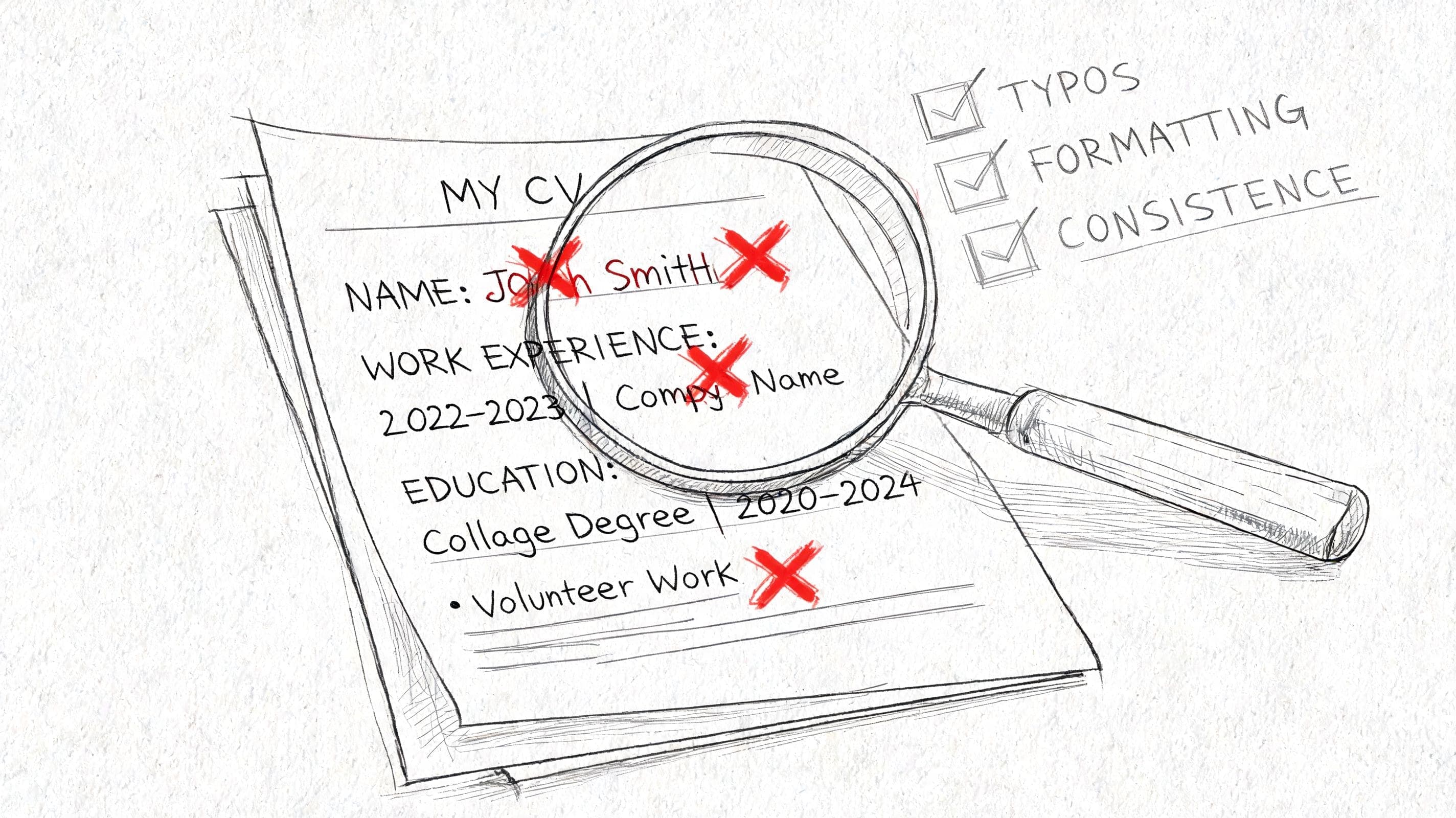
Use this as a final review list:
Generic personal statement
If your opening could fit any person applying for any job, it isn't helping.Skills with no evidence
Anyone can write "hard-working" or "good communicator". Back it up somewhere else on the page.Messy formatting
Inconsistent dates, uneven spacing, random bolding, and mixed bullet styles make the CV feel careless.Unprofessional email address
It weakens your credibility instantly.Too much irrelevant detail
Don't include personal data or old information that doesn't support your application.Listing duties only
"Worked in a shop" tells the employer almost nothing useful.Spelling and grammar errors
One typo won't always ruin your chances, but several suggest weak attention to detail.Sending the same CV everywhere
A generic CV usually reads like one.Overdesigned templates
They often create more problems than they solve.Underselling yourself
This is one of the most common problems on a first CV.
The confidence mistake nobody talks about enough
Many first-time applicants edit themselves down before a recruiter ever gets the chance. They call meaningful work "just helping" or "only a uni project". That language strips value from your experience.
A discussion on first-time CV anxiety and blank-page paralysis highlights something most writing guides miss. The barrier is often psychological as much as technical. If you start from the assumption that you have nothing to offer, your CV will sound like it.
Your first CV should be honest, not apologetic.
A practical fix is to brainstorm experiences before you start formatting. Write down projects, roles, responsibilities, presentations, deadlines met, tools used, and times you helped organise something. Once those are visible, the CV becomes far easier to write.
A final quality check
Before sending your CV, read it once as a recruiter would.
Ask:
- Can I see what role this person wants?
- Can I spot relevant skills quickly?
- Do the bullet points show evidence, not just claims?
- Does the document look clean and consistent?
- Would I trust the care taken here?
If any answer is no, revise before you apply.
Your First CV Questions Answered
Should I include a photo on my CV
Usually, no. For UK CVs, a photo is not standard and can distract from the content. Keep the focus on your qualifications, skills, and evidence.
Should my first CV be one page
Yes, in most cases. A first CV should be concise. If you're early in your career, one well-built page is stronger than two pages of repetition.
What file format should I use
PDF is usually the safest option because it preserves your layout. Use another format only if the employer specifically requests it.
How should I name the file
Use a straightforward format such as:
Firstname-Surname-CV.pdf
That looks professional and makes your file easier for recruiters to find later.
Can I use a creative or colourful template
For most first-time applications, no. A simple layout is easier to read and usually safer for online screening systems. If you work in a creative field, you can show design sense in your portfolio rather than forcing it into your CV.
What if I'm applying in a specialist field
Look for advice that reflects your industry context. For example, candidates in technical fields may benefit from more specialized guidance such as this resource on CV writing advice for women in STEM, which shows how to present technical capability and potential clearly.
What if I still feel like I have nothing to write
Start by listing evidence, not sections. Write down coursework, software used, presentations given, volunteer tasks, clubs joined, deadlines handled, and any time you solved a problem or helped run something. Your CV is built from that raw material.
If you want help turning that raw material into a structured, ATS-friendly document, CV Anywhere can help you build your CV, check job-description fit, and keep track of applications in one place. It's a practical way to move from a blank page to a finished first CV without losing the details that make you relevant.