
A lot of students search for a cv template uk for students when they're staring at a blank page and thinking, "I've barely worked anywhere, so what exactly goes on this?" The good news is that a strong UK student CV doesn't depend on having years of paid work. It depends on using the right structure, choosing evidence that actually matters, and matching the document to the job.
A good student CV should be short, clear and built for fast scanning. It should also make hidden experience visible, especially projects, volunteering, societies, coursework and part-time roles. The sections below show exactly how to do that.
Choosing the Right UK Student CV Layout
The strongest layout for most students is simple, professional and easy to skim. For UK applications, that usually means a reverse chronological structure with recent education, experience and activities first.
Oxford's Careers Service notes that employers may spend only a few seconds reviewing a CV, and that many employers also use Applicant Tracking Systems to screen applications. That's why the document needs to surface relevant skills and experience immediately, not bury them halfway down the page in dense paragraphs. This is set out in Oxford's CV guidance for UK applicants.
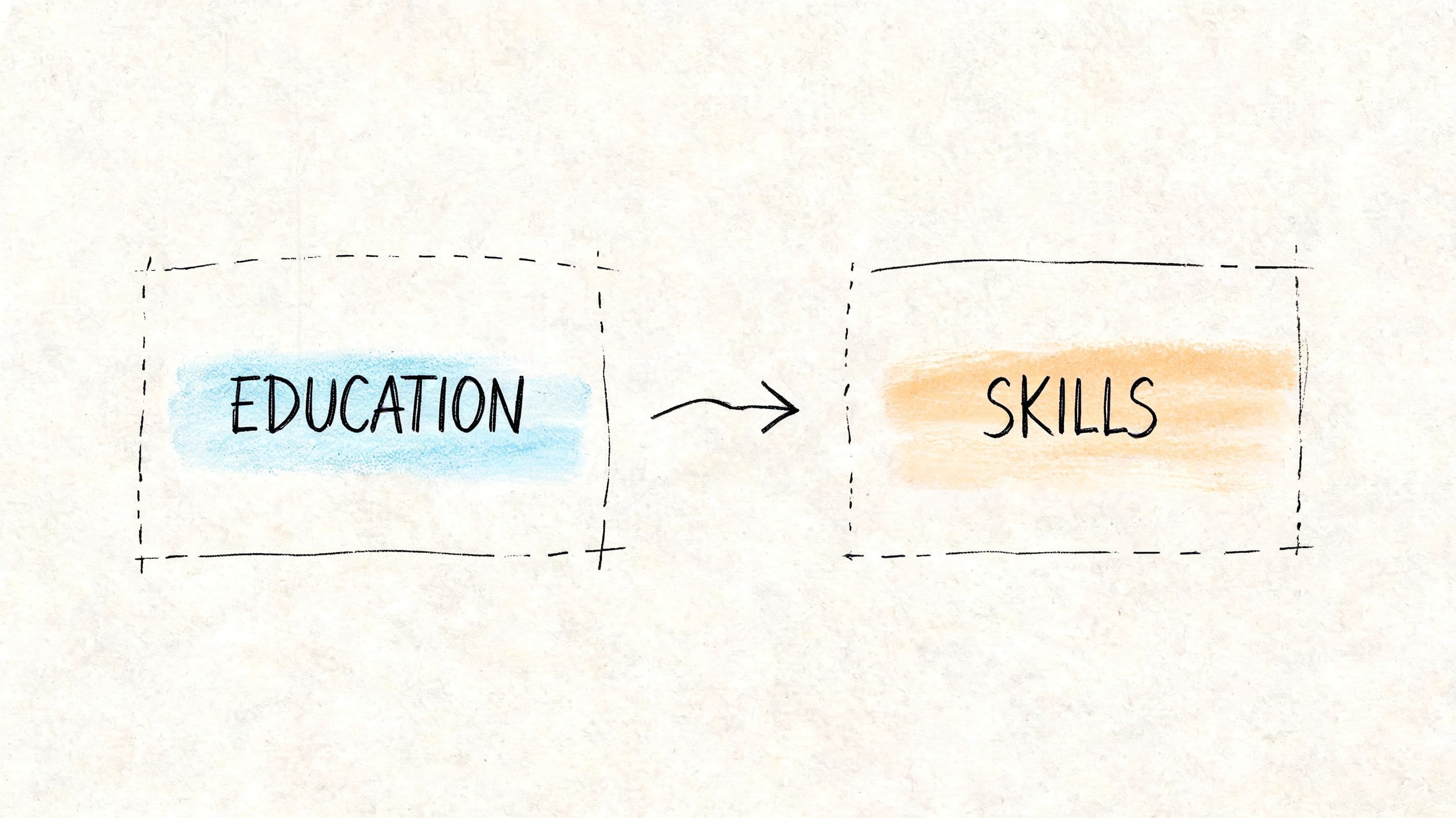
The layout that works
For most students, the best order is:
- Name and contact details
- Short profile
- Key skills
- Education
- Work experience
- Volunteering, projects, positions of responsibility or interests
This order works because it puts value near the top. A student often has stronger academic and extracurricular evidence than employment history, so the CV should reflect that.
Practical rule: If a recruiter can't tell what kind of role the student wants and what they offer within a quick scan, the layout isn't doing its job.
Keep it clean, not clever
The template doesn't need design flourishes. It needs strong section headings, consistent spacing and bullet points that are easy to read. Fonts such as Calibri or Arial are widely accepted because they're clear on screen and in PDF.
A student CV should also stay concise. The Radclyffe School advises keeping a CV to one or two A4 pages maximum, checking spelling and grammar carefully, and never lying on the CV, as set out in the school's CV guide. For most students, one page is the better target.
A quick layout checklist helps:
- Use clear headings so the recruiter can jump straight to education, skills or experience.
- Leave white space so the page feels readable rather than cramped.
- Stick to bullet points instead of long paragraphs under each role or activity.
- Save as PDF unless an employer asks for a different file type.
- Start with relevance by moving the strongest evidence closer to the top.
Students who are unsure how to condense everything can use this guide to a 1 page CV format.
What doesn't work
A weak student CV usually fails in one of three ways:
| Approach | Why it fails | Better option |
|---|---|---|
| Fancy graphic template | Harder to scan and harder to tailor | Plain structure with clear headings |
| One generic CV for every application | Important keywords and evidence stay hidden | Adjust profile, skills and bullets for each role |
| Long blocks of text | Recruiters won't dig for relevance | Short bullets with proof |
The template is only useful if it makes the student's evidence obvious. In UK hiring, clarity beats creativity most of the time.
Build a CV that actually gets interviews
Start from your current CV — or from scratch — with step-by-step guidance so you do not get stuck.
Free. No blank page. No templates to wrestle with.
What to Include When You Have No 'Real' Experience
A lot of students say they have "no experience" when what they really mean is "no formal office job". Those aren't the same thing.
UK careers guidance rarely spells this out clearly enough. Students often have relevant evidence sitting in societies, volunteering, campus leadership, online courses and project work. York highlights that students with little experience can draw on education, volunteering, campus involvement and interests, and Oxford also recommends including society roles, voluntary work and community activity rather than limiting the CV to paid work. That guidance is summarised in York's advice on CVs with little experience.
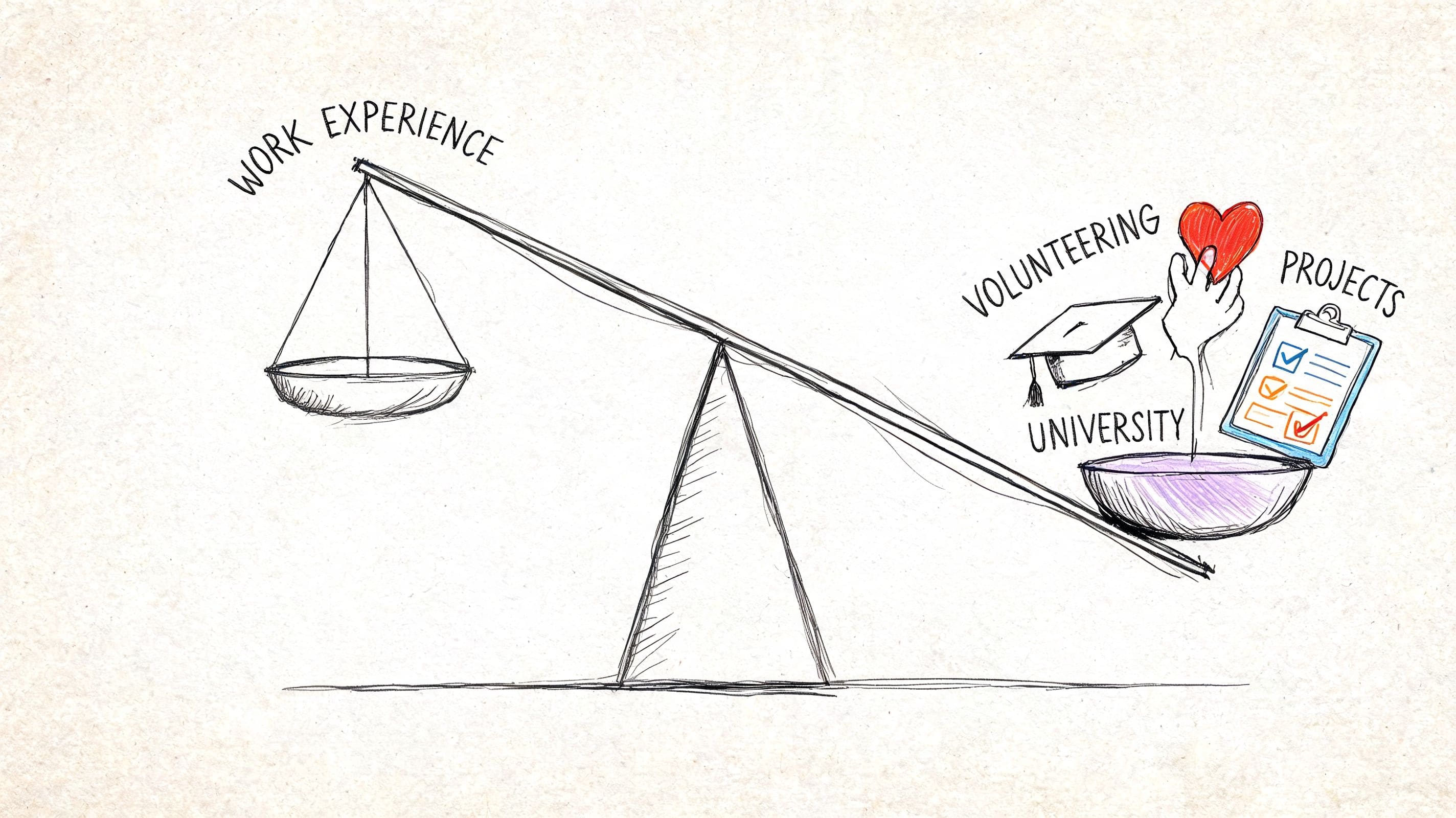
What counts as experience
If it shows skill, responsibility or output, it can count.
That includes:
- University projects such as presentations, reports, lab work, coding assignments or group research
- Student societies including committee roles, event planning or membership tasks
- Volunteering in charity shops, community events, mentoring, fundraising or support roles
- Part-time work in retail, hospitality, tutoring or admin
- Independent learning like online courses, portfolios, personal websites or self-directed projects
A student CV becomes stronger the moment unpaid work stops being treated as filler and starts being presented as evidence.
How to turn ordinary activities into useful bullet points
A weak bullet just lists the activity. A useful bullet shows action plus outcome or responsibility.
Here's the difference:
| Weak version | Stronger version |
|---|---|
| Group project at university | Collaborated on a research project, organised findings and presented conclusions in a seminar |
| Member of debate society | Contributed to weekly debates, prepared arguments and improved verbal communication under time pressure |
| Volunteered at local charity shop | Supported customers, sorted donations and handled day-to-day shop tasks in a busy setting |
| Helped at open day | Welcomed visitors, answered questions and represented the department professionally |
If the student has coursework linked to the job, it should be used. For example, a marketing student can include campaign planning or analytics assignments. A computer science student can include coding projects, GitHub work or software modules. A science student can include lab techniques, data handling and report writing.
Study habits can also point to workplace strengths when phrased carefully. For students preparing for exams alongside applications, structured learning methods can support claims around organisation and self-management. A useful example is MasteryMind's guide for UK exam students, which explains active recall in a way that helps students describe disciplined revision and independent learning more concretely.
A better way to think about an “empty” CV
A student with no traditional work history often has enough material for these sections:
- Education
- Key skills
- Projects
- Volunteering
- Positions of responsibility
- Interests that show commitment or relevance
That's not an empty CV. It's an evidence-selection problem.
Students who need more examples of how to frame limited experience can also look at this guide on how to write a resume with no experience. Even though the page uses resume language, the core method of turning activities into evidence still applies.
How to Write a Powerful Student Skills Section
For students, the skills section often does a lot of heavy lifting. It gives employers a quick summary of what the candidate can do before they reach the detail lower down the page.
The key is not to dump in every skill that sounds employable. A useful benchmark from a UK template provider is to aim for 6–10 well-chosen skills, grouped logically, and to support key skills with short evidence statements. The same guidance warns against overloading the CV with generic soft skills and leaving them unproven, as explained in this British CV template guide.
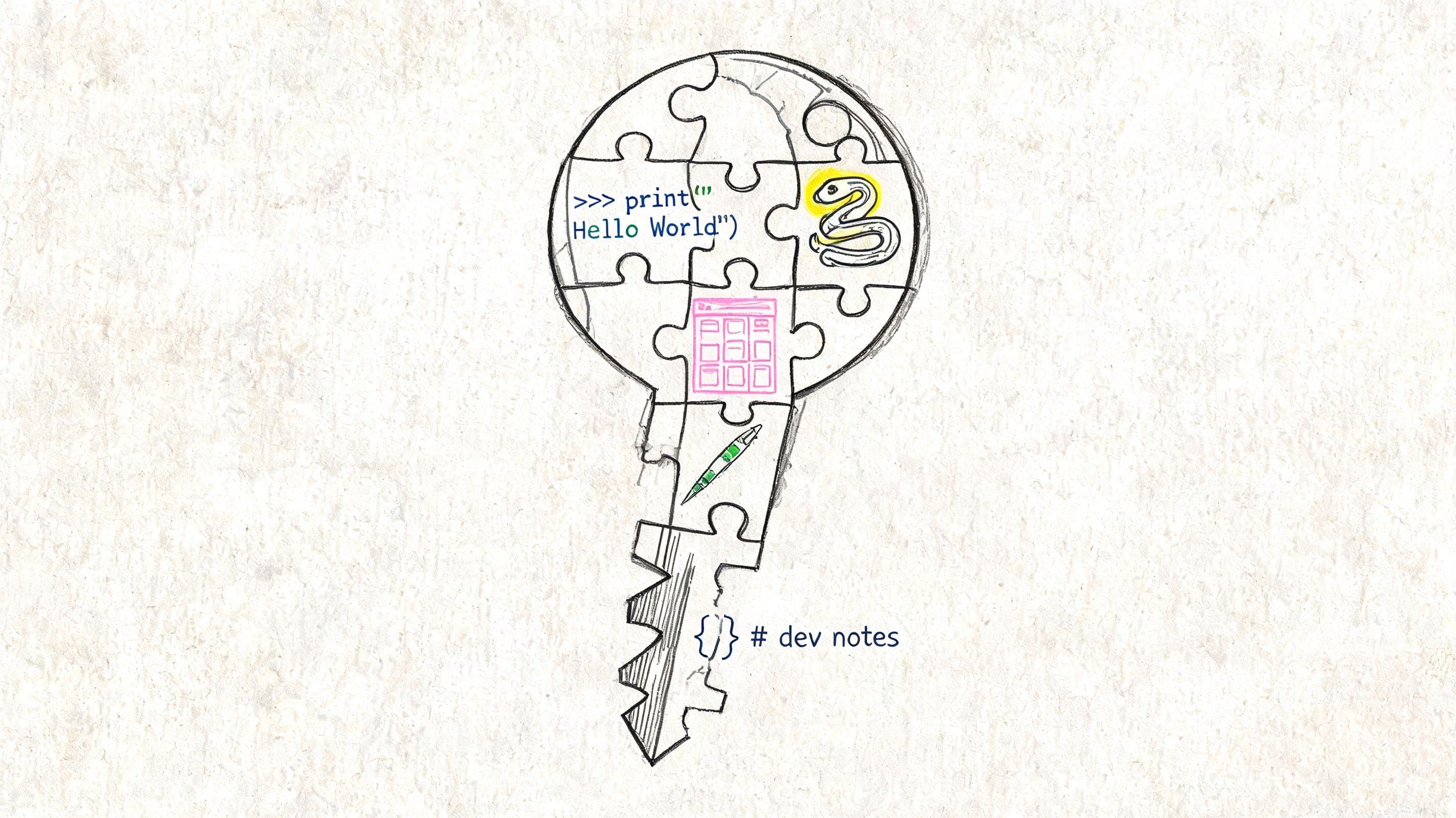
Split skills into useful categories
A student skills section usually works best when it mixes technical skills and transferable skills.
For example:
- Technical skills — Python, Excel, Canva, Adobe Photoshop, SPSS, WordPress, French
- Transferable skills — Communication, teamwork, organisation, customer service, problem-solving, leadership
The mistake is writing them as a bare list. A stronger version adds proof.
Show the evidence
Compare these two versions:
| Weak skill entry | Better skill entry |
|---|---|
| Communication | Communication. Presented research findings during seminars and group presentations |
| Teamwork | Teamwork. Worked with peers on group coursework and shared deadlines effectively |
| Customer service | Customer service. Supported customers in a part-time retail role and handled queries calmly |
| Excel | Excel. Used spreadsheets to organise data for coursework and track project tasks |
That small line of proof changes how believable the skill is.
Hiring lens: If a skill can't be connected to an example, it usually doesn't deserve space on the page.
Group skills to help scanning
A good skills section might look like this:
Technical
- Excel. Used for coursework data and planning
- Canva. Created simple promotional graphics for a society event
- Python. Built basic scripts as part of course assignments
Workplace
- Communication. Delivered presentations and wrote structured reports
- Teamwork. Coordinated shared tasks in group assignments
- Organisation. Balanced coursework, deadlines and extracurricular commitments
Students looking for inspiration can browse these CV skills examples.
What to cut
Three things usually need removing:
- Empty buzzwords like "hard-working", "motivated" or "dynamic"
- Duplicated skills that already appear clearly in another section
- Weak claims that can't be backed up in interview
The best skills section is brief, relevant and believable. If the role asks for customer contact, admin accuracy or software knowledge, those should be surfaced first. If the role is technical, the technical skills should lead.
How to Tailor Your Student CV to Any Job
Most student CV advice says "tailor your CV" and then stops there. That's not enough. Students need a method, not a slogan.
Tailoring matters because a generic CV forces the employer to work out the match for themselves. Most won't. A targeted CV makes the fit obvious by reflecting the language, priorities and evidence the employer is already looking for.
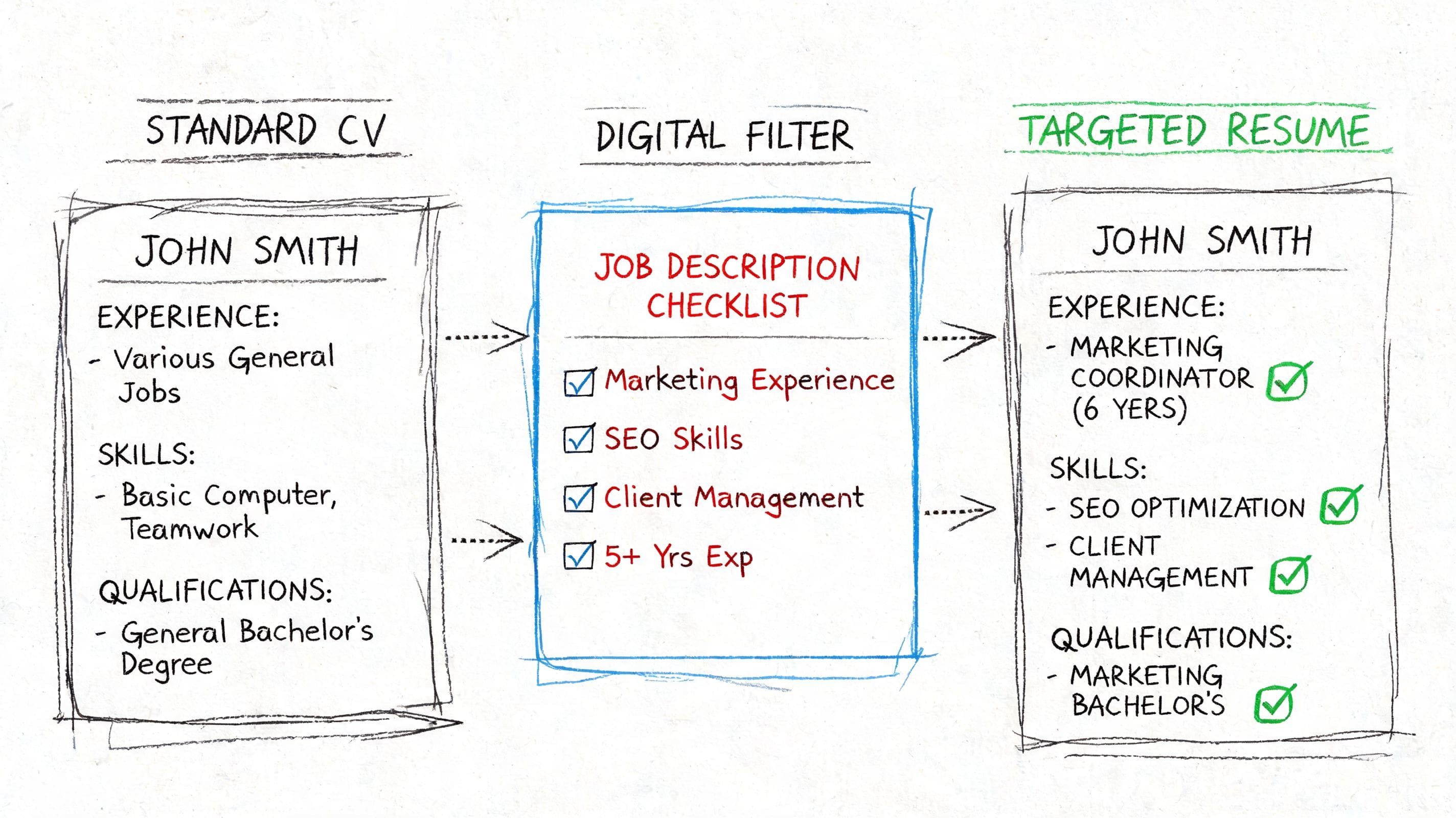
Start with the job description, not the old CV
A practical approach is to mark up the job advert before changing anything on the CV.
Look for:
- Repeated skills such as communication, teamwork, data entry or customer service
- Specific tools like Excel, Python, CRM systems or social media platforms
- Core tasks such as serving customers, writing reports, supporting projects or organising events
- Signals about pace or environment including busy teams, deadlines, shift work or independent working
Those clues tell the student what needs to move up the page.
Change three areas first
The fastest gains usually come from these sections:
Profile Mention the type of student, the target role and the most relevant strengths.
Skills section Mirror the employer's wording where it's accurate. If the advert says "customer service", don't swap it for "people skills".
Bullet points under experience or projects Rewrite bullets so they emphasise the parts of previous experience that match this specific role.
Here's an example.
If the role is for a student admin assistant, this is too broad:
- Helped with society events and coursework projects
A better version is:
- Organised meeting notes, coordinated deadlines and handled event admin for a student society
If the role is for retail, a different angle works better:
- Supported visitors at society events, answered questions and helped manage busy sign-in periods
Use a fit check instead of guessing
A lot of students miss strong opportunities because they tailor by instinct rather than checking alignment properly. One option is a fit checker tool that compares a CV against a job description and points out missing skills, unclear wording or gaps in relevance. For example, CV Anywhere includes a Fit Checker that analyses a job description and highlights match gaps so students can adjust their profile, skills and bullet points more systematically.
Students who want a manual process can still follow the same principle. Compare the advert line by line against the CV and ask:
- Is this requirement visible near the top?
- Is the wording close enough to be recognised?
- Is there evidence, not just a claim?
- Is irrelevant content taking up space?
For more detail on the tailoring process, this guide on how to tailor resume to job description breaks down the workflow clearly.
A tailored student CV doesn't need more content. It usually needs better emphasis.
Common Student CV Mistakes and How to Avoid Them
A student sends ten applications and hears nothing back. The usual problem is not lack of potential. It is that the CV makes it hard for an employer to spot relevant evidence quickly.
I see the same pattern in appointments. Students often have more usable material than they think, but they bury it under vague phrases, long paragraphs or details that do not help with the role they want. A strong CV is selective, specific and easy to scan.
Keep the document tight, check every line for accuracy, and stay honest. If a claim would be difficult to explain in an interview, remove it or rewrite it with clearer evidence.
The avoidable mistakes
Too much text Large blocks of writing slow recruiters down. Use bullet points, cut repeated wording, and keep the strongest evidence near the top.
A generic opening profile "Motivated student looking for opportunities" does not tell an employer what kind of role fits or what the student offers. Name the target role and point to relevant evidence.
Describing duties instead of contribution "Helped with events" is weak because it hides the useful part. Say what was handled, who was supported, or what result followed.
Leaving out hidden experience Students often ignore coursework, group projects, volunteering, society roles and part-time responsibilities because they do not see them as proper experience. Employers often do, if they are written in a job-relevant way.
Poor proofreading Spelling mistakes, inconsistent dates and messy formatting make the application look rushed.
Unprofessional contact details An old nickname email address can damage an otherwise solid CV.
Adding a photo For UK student CVs, this is usually unnecessary and can make the document look less professional.
How to fix them
| Mistake | Better approach |
|---|---|
| CV feels long but still weak | Remove low-value detail and keep evidence that matches the role |
| Skills section is full of claims | Add proof from projects, volunteering, coursework or paid work |
| Experience looks too thin | Mine hidden experience and write it as evidence, not as a list of tasks |
| Layout is inconsistent | Use one font, clear headings, and even spacing throughout |
| Wording sounds inflated | Choose plain, specific language you can defend in interview |
One practical check helps here. Read each bullet and ask, "Would a recruiter understand why this matters for the job?" If the answer is no, the bullet needs more context, clearer wording, or replacing.
Students who are unsure what "good" looks like should compare their draft against a few strong student CV examples for different job types. That makes weak wording easier to spot.
The best student CVs are rarely the ones with the most experience. They are the ones that present evidence clearly, use relevant examples from academic and extracurricular work, and cut anything that does not earn its space.
Student CV Template FAQs
Should students include GCSEs and A-levels on a CV?
Usually, yes, especially if the student is early in their education or has limited experience. Education is often one of the strongest sections on a student CV, so it shouldn't be underplayed.
A practical approach is:
- School or sixth form students should normally include GCSEs and A-levels
- University students can include degree details first, then a shorter summary of earlier qualifications
- Older students with more experience can keep school qualifications brief
If space is tight, the CV doesn't need a long subject-by-subject list unless those subjects are directly relevant to the role.
Should references go on a student CV?
Most of the time, no. References usually don't need to sit on the CV itself unless an employer asks for them.
Two options work better:
- Leave them off entirely
- Write References available on request only if there's space and the employer expects it
In practice, that space is often better used for skills, projects or volunteering. A student CV has to earn every line.
What file format should a student use when sending a CV?
PDF is usually the safest choice unless the employer asks for a Word document or an online form upload. PDF keeps spacing, headings and bullet points intact.
The filename matters too. A professional format is simple:
FirstName-Surname-CV.pdf
That looks organised and makes the file easy for recruiters to find later.
What hobbies should go on a student CV?
Only include hobbies if they add something useful. Good hobbies show commitment, teamwork, leadership or relevant interest.
For example:
- Sport can suggest discipline and teamwork
- Blogging or content creation can support media or marketing applications
- Coding side projects can support technical roles
- Society involvement can show initiative
Casual hobbies that don't add value can usually be cut.
Where can students find examples before writing their own?
Before drafting, it helps to review a few realistic structures rather than copying a single template blindly. This collection of CV examples for students is useful for seeing how education, skills and limited experience can be arranged for different situations.
A strong student CV doesn't come from having a perfect background. It comes from presenting real evidence clearly and matching it to the role. CV Anywhere helps with that process through CV building, job description fit checking and application tracking, so students can write, tailor and manage applications in one place.