If you're searching "review my CV", you usually don't want theory. You want to know whether your CV is strong enough to win interviews, what to fix first, and who should review it. The fastest way to do that is a hybrid review process: check your CV against a real job advert with AI first, then use human feedback to sharpen clarity, credibility and story.
Before You Ask Anyone to Review My CV
Most CV reviews fail before they start. The reviewer gets a vague document, no target role, no evidence of outcomes, and no context about what kind of jobs the person wants. At that point, the feedback becomes generic.
A useful review starts with raw material. A polished sentence is nice, but it won't rescue a CV that has no proof of value. That matters because 82% of employers worldwide relied on CVs for hiring in the past 12 months, while 89% of UK employers reported persistent problems with them in 2025 according to TestGorilla's hiring data summary. If your CV looks like everyone else's, it blends in.
Start with evidence, not wording
Don't begin by tweaking adjectives. Begin by collecting facts from your work, study, placements, volunteering, or side projects.
Look for hard detail in four areas:
- People: team size, stakeholders supported, customers served, staff trained
- Time: deadlines met, turnaround reduced, projects delivered on schedule
- Money: budgets handled, savings found, revenue influenced, purchasing responsibility
- Scope: volume of work, number of cases, accounts, campaigns, events, or systems managed
If you don't have obvious commercial numbers, that's fine. Use operational evidence instead. A graduate can still show impact through outcomes, ownership, and scale.
Practical rule: A reviewer can improve how you present achievement. They can't invent achievement for you.
Weak bullet:
- Responsible for customer service and admin support
Stronger source material:
- Handled daily customer queries, maintained booking records, resolved scheduling issues, and supported front-desk operations during peak periods
Best version if you have proof:
- Resolved customer queries, maintained booking records, and supported front-desk operations during peak periods while keeping scheduling accurate and organised
The last example works because it's specific, even without a number.
Pick one or two real job adverts
If you ask someone to "review my CV" without a target role, they'll usually give broad comments on formatting and grammar. That's rarely enough.
Choose one primary job advert and one backup advert for roles you'd apply for. Print them, save them, or paste them into a document. Highlight repeated terms, tools, responsibilities, and must-have skills. This gives your review a destination.
Use this quick prep checklist before sending your CV to anyone:
- Target roles chosen: one main advert, one secondary advert
- Career direction clear: same function, level, and industry where possible
- Master CV ready: full history, not just the cut-down version
- Achievements gathered: evidence from work, study, internships, volunteering
- Missing details filled in: dates, locations, job titles, systems, certifications
- Questions prepared: what exactly you want the reviewer to check
For a sharp self-edit before external feedback, it's worth using Natural Write's comprehensive checklist. It's helpful for catching phrasing, repetition, and clarity issues that can muddy your message before a proper review.
A final step helps. Read through a practical guide on how to review a CV effectively so you know what a strong review should cover. That makes it easier to tell the difference between useful feedback and casual opinion.
Is your CV actually getting responses?
Your CV might be missing something important
Upload your CV → see its weakest areas → fix them, one by one.
Free. Takes less than 2 minutes.
Using AI for an Instant CV Health Check
Your first reviewer should be a machine, because the first gate often is one. If your wording doesn't line up with the job advert, your CV can lose momentum before a recruiter reads it properly.
That's why an AI health check works well as the first pass. It gives you an objective baseline instead of vague advice like "tailor it more".
What the machine is looking for
Job adverts aren't random. Job descriptions contain an average of 43 keywords, and top-performing CVs match about half of those keywords and skills, according to Cultivated Culture's analysis. That's the reason generic CVs underperform. They often describe the candidate accurately, but not in the language the employer is using.
An AI checker is useful when it helps you answer questions like:
- Are the core skills from the advert present in my CV?
- Am I missing job-title language the employer expects?
- Have I buried relevant experience under vague wording?
- Do my summary and top bullets reflect the target role?
How to run the first-pass review
Use one specific advert. Don't combine several. A blended target creates muddy feedback.
A practical workflow looks like this:
Upload or paste your current CV Use the version you'd send today, not the ideal version in your head.
Paste the target job description
Include the full advert if possible, especially duties, required skills, and person specification.Review the match results
Focus on missing competencies, repeated terms, and weak alignment in the opening half of the CV.Fix relevance before polish
Update your profile, headline, skills section, and first few role bullets first. That's where alignment matters most.Recheck after edits
The point isn't to cram in terms. The point is to improve fit while keeping the CV readable.
If you want a walkthrough of what these checks usually flag, this guide on using an AI CV checker is a practical next read.
A simple before and after example
Say the job advert asks for stakeholder management, reporting, project coordination, and process improvement.
Your original bullet says:
- Responsible for supporting multiple internal teams and helping with reporting tasks
That's too soft. It hides useful relevance.
A stronger revision could be:
- Coordinated work across internal teams, prepared reports for stakeholders, and supported process improvements to keep projects on track
Same experience. Better alignment.
AI should tell you where the gaps are. It shouldn't rewrite your history into something untrue.
What to change first
Don't edit every line at once. Prioritise the parts recruiters see fastest.
| CV area | What to check | What usually works |
|---|---|---|
| Profile | Target role reflected clearly | Match the role focus and core strengths |
| Skills section | Missing hard skills or systems | Add relevant skills already backed by experience |
| Latest role | Relevance hidden in vague bullets | Rewrite bullets using job-ad language where accurate |
| Older roles | Irrelevant detail taking space | Trim or compress lower-value content |
| Formatting | Parsing issues | Use plain headings and clean structure |
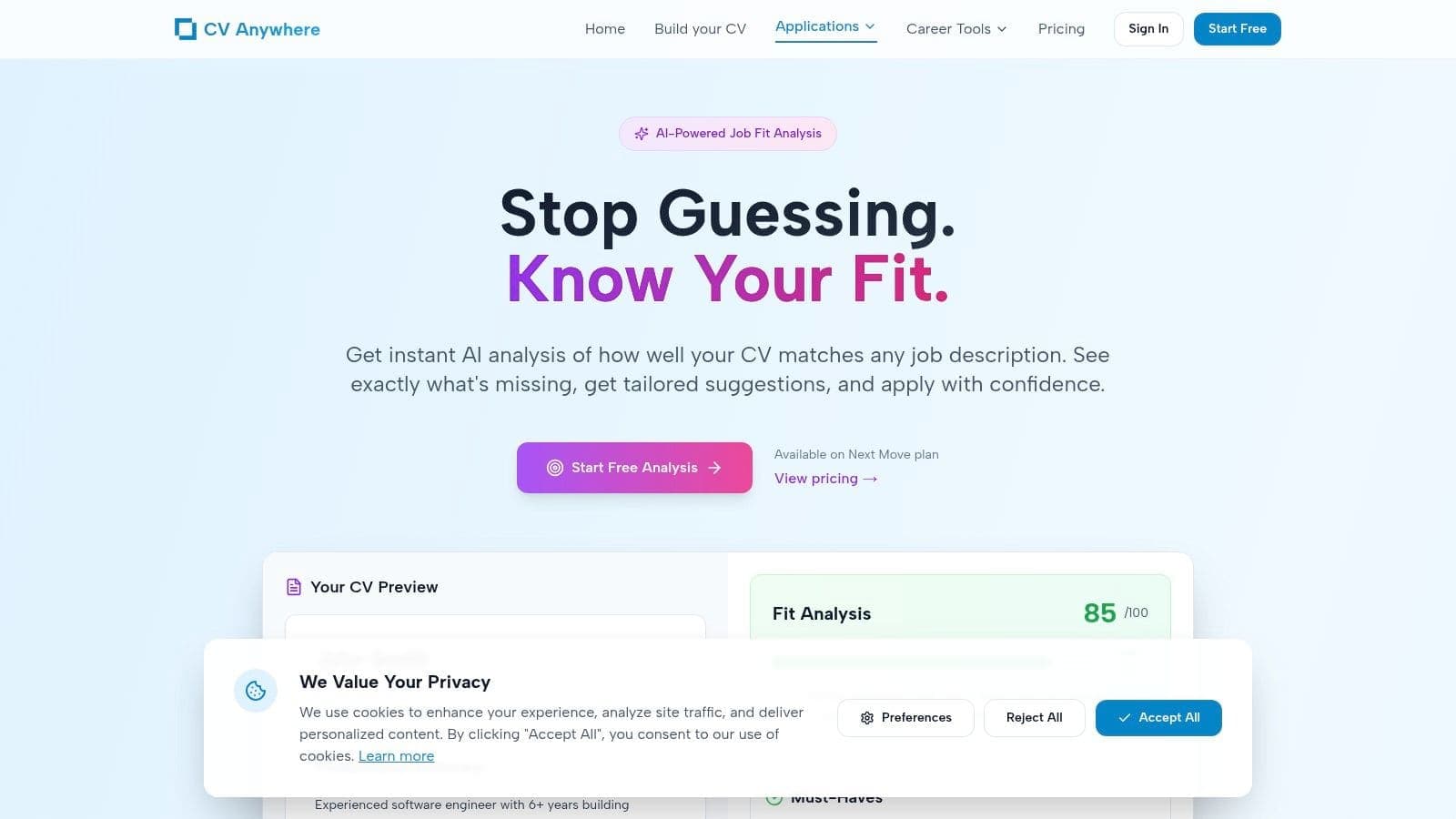
One factual option in this space is CV Anywhere's JD Fit Checker, which compares a CV against a pasted job description and highlights fit gaps. Used properly, tools like that are helpful for diagnosis. They show where your wording misses the brief. They don't replace judgement.
Choosing the Right Person for a Human CV Review
Once the machine check is done, a human reviewer should test whether your CV feels credible, focused and persuasive. This is where nuance matters. A recruiter or hiring manager doesn't just ask, "Does this match the advert?" They also ask, "Do I believe this person can do the job?"
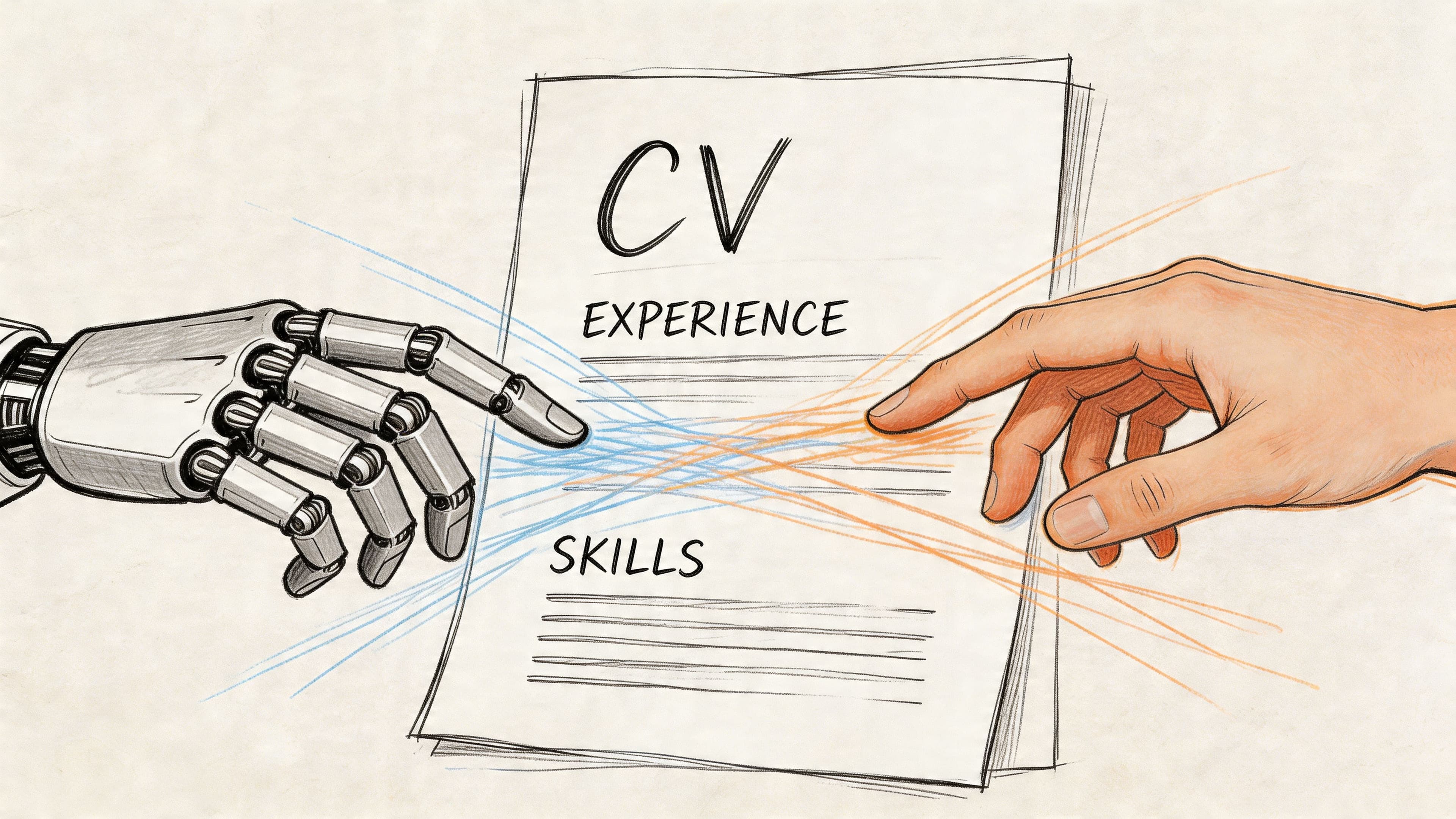
Human review is especially useful for bullet strength, sequencing, and tone. According to StandOut CV's recruiter review data, using active language such as "Led" instead of "Responsible for" can boost the perception of confidence by 25%, and putting quantified results first aligns with how 47% of recruiters scan a CV in under a minute.
Who should review your CV
Not every reviewer is equally useful. The right choice depends on the type of feedback you need.
| Reviewer | Best for | Blind spots |
|---|---|---|
| Friend or family member | Grammar, readability, obvious confusion | Often too polite, may not know hiring standards |
| Colleague | Reality-checking your claims and terminology | May mirror your current company language too closely |
| Mentor in target field | Relevance, positioning, seniority fit | May focus heavily on their own path |
| Professional CV writer | Structure, messaging, market expectations | Quality varies, and some over-polish tone |
If you're targeting leadership-track or commercial roles, it can also help to understand how coaching frameworks assess executive potential and communication. This piece on data-driven leadership development is useful context for how external reviewers often think about evidence, decision-making and progression.
For candidates comparing support options, it's also worth reading about what a resume writer actually does, especially if you're deciding between peer feedback and paid help.
What to ask instead of "Can you review my CV?"
The question shapes the feedback. "Looks good?" gets you almost nothing.
Send your CV with the job advert and ask questions like these:
- First impression: After reading the first half-page, what role do you think I'm targeting?
- Relevance: Which points feel strongest for this job, and which feel generic?
- Credibility: Are there any claims that sound vague or unsupported?
- Clarity: Is anything confusing, repetitive, or buried too low down?
- Gaps: What would stop you shortlisting me?
"If a reviewer can't tell your target role within seconds, your CV isn't clear enough yet."
Copyable message to request a review
You can send this by email or message:
Hi [Name], I'm applying for [role title] positions and I'm refining my CV against a specific job advert. Would you mind reviewing it with that role in mind? I'd find it most helpful if you could comment on whether my CV clearly shows relevant experience, whether the strongest points appear early enough, and whether any wording feels vague or unconvincing. I've attached the CV and the job advert for context. Thank you.
That framing usually gets better feedback than an open-ended request.
How to Merge AI and Human Feedback Effectively
People often make a mess of their CV. This occurs when they collect comments from an AI tool, a friend, a recruiter, and maybe a former manager, then try to satisfy everyone. The result is a bloated document with mixed tone and awkward phrasing.
You need a decision rule. Not all feedback deserves equal weight.
Use this order of priority
When feedback conflicts, work in this order:
ATS compatibility
If the target role uses terms your CV doesn't include, fix that first.Clarity and relevance
If a human reviewer says your strongest evidence is hidden, move it higher.Credibility and proof
If a bullet sounds impressive but unsupported, rewrite it.Style preferences
Tone, wording taste, and formatting preferences come last.
This stops you from obsessing over minor wording while major fit issues remain untouched.
Accept, reject, or adapt
You don't need to apply every comment strictly. Use three buckets.
Accept feedback when it identifies a clear gap.
Example: the advert asks for budget management and your CV mentions procurement support but not the budget responsibility you held.
Reject feedback when it weakens accuracy.
Example: someone suggests adding language you can't support in interview.
Adapt feedback when the point is right but the phrasing isn't.
Example: an AI tool flags a missing skill phrase, but the suggested sentence sounds robotic. Keep the skill. Rewrite the line in your own voice.
Working rule: mandatory fit beats elegant prose. Elegant prose only matters after the CV matches the job.
Keep formatting stable while editing
A common mistake is pasting revised lines into an old Word file until spacing, indentation and hierarchy start breaking. Then the CV becomes harder to scan.
Use one clean source file and update it systematically:
- Edit top-down: profile, skills, latest role, then older experience
- Keep bullets parallel: start with strong verbs, then outcome or scope
- Protect spacing: don't let rushed edits create visual clutter
- Save versions clearly: one version per target role family
If you want AI help with rewriting while preserving structure, an AI CV builder can make the implementation stage cleaner. The main thing is to keep the document ATS-friendly and easy for a person to scan.
A quick conflict example
AI feedback says to add "stakeholder engagement".
Human feedback says your CV sounds too buzzword-heavy.
Both can be right.
Poor fix:
- Responsible for stakeholder engagement and communication across cross-functional business areas
Better fix:
- Worked with internal stakeholders across operations and finance to keep project updates accurate and timely
The keyword stays. The sentence sounds human.
Beyond the Review: Tracking Your Applications
A CV review isn't finished when the document looks good. It's finished when you know whether that version produces interviews.
That's the missing step in most advice. People revise the CV, send it out, then rely on memory to judge whether it worked. Memory is unreliable. A log is better.
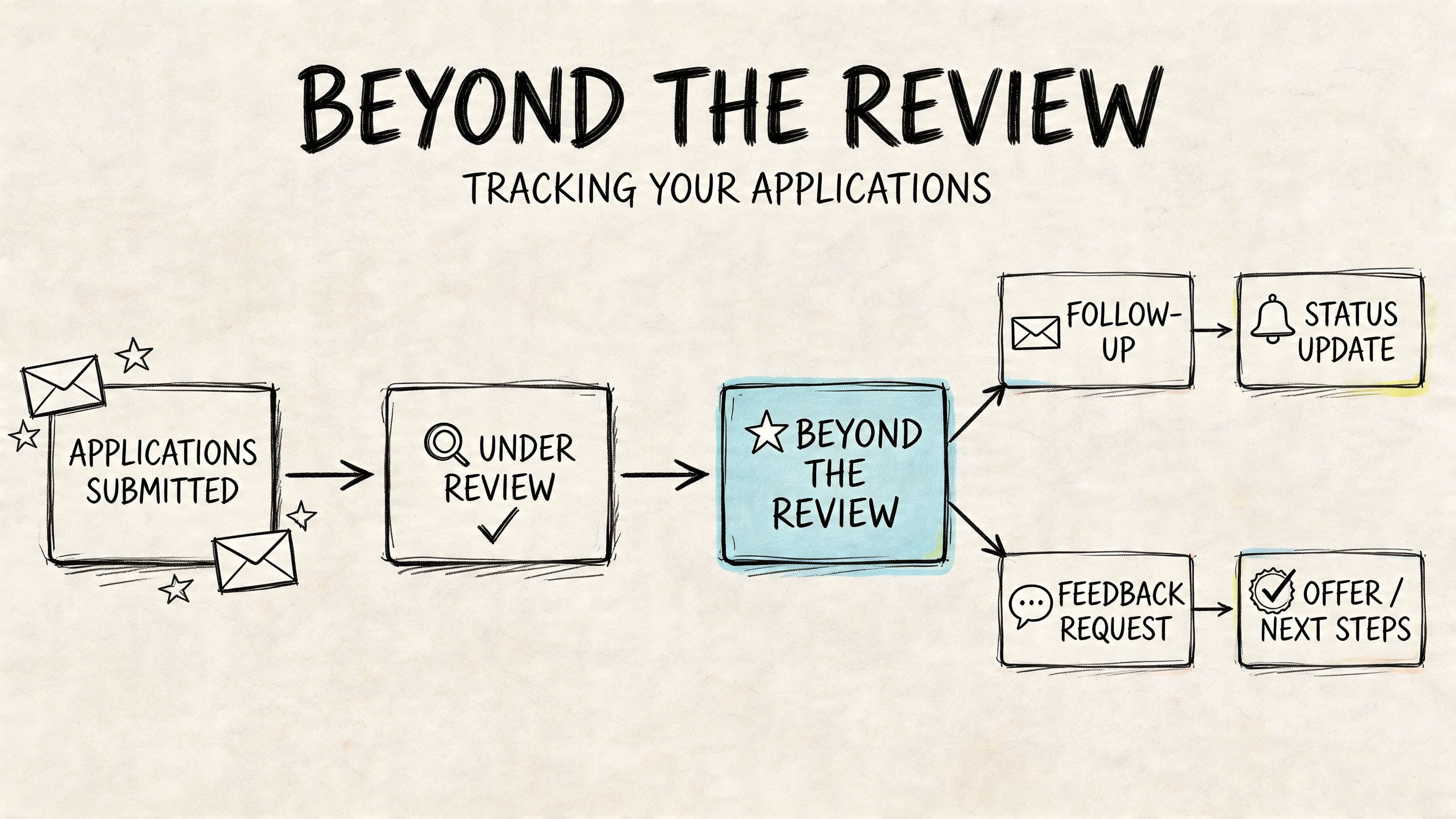
A practical point from CV Anywhere's discussion of wider job-search gaps is that a common unaddressed question is why someone gets no interviews even after multiple CV reviews. Often the issue isn't only the document. It's the wider application strategy. Ignoring tracking leads to disorganised effort, while centralising statuses and reminders can save hours and reveal which CV versions are working.
What to track
You don't need a complex dashboard. You do need consistency.
Track these fields:
- Role title: so you can compare similar jobs
- Company name: obvious, but many people lose track
- Version used: customised CV A, graduate CV, project-focused CV
- Date applied: useful for follow-ups
- Status: applied, viewed, interview, rejected, withdrawn
- Notes: referral, recruiter contact, interview feedback
What patterns matter
The goal isn't admin for its own sake. The goal is diagnosis.
If one version gets responses and another doesn't, compare the opening profile, keyword alignment, and first role bullets. If applications stall only in one sector, your positioning may be off. If you get interviews but no offers, the bottleneck may have moved beyond the CV.
For people who want one place to manage that process, a job application tracker is the practical next step. It's easier to improve your search when you can see the evidence.
Common Questions About CV Reviews
How often should I get my CV reviewed
Review your CV whenever you target a new role family, change level, or notice weak response rates. You don't need a full rewrite for every application, but you do need to check relevance against the specific advert.
Is a professional review worth it
It can be, especially if you're changing industry, aiming for a more senior role, or struggling to explain your value clearly. For some people, a strong mentor gives enough insight. For others, paid support saves time and avoids weak positioning.
Should I ask a recruiter to review my CV
Yes, if the recruiter works in your target market and has a reason to help. Keep the request focused. Ask whether your CV fits the role level, highlights the right evidence, and makes your specialism clear.
What if I have little experience
Then your review should focus on relevance, not seniority. Coursework, internships, volunteering, part-time work and projects can all show transferable skills if they're described properly. Clarity matters more than trying to sound overly experienced.
Are some sectors harder to tailor for
Yes. Broad roles can be trickier because the adverts vary more. In those cases, build one strong base CV and create targeted versions by sector or function. If you're exploring sales, partnerships, account management, or related commercial paths, it can help to explore B2B career opportunities to understand the language those employers use before asking someone to review your CV.
If you want a faster way to move from "review my CV" to a customised application, CV Anywhere brings CV building, job-description matching, and application tracking into one workflow so you can check fit, refine the document, and keep your search organised.