CV Template UK for School Leavers: 2026 Guide and Examples
Download our free cv template uk for school leavers to land your first job in 2026. Includes expert tips on writing a professional CV with no work experience.

The strongest cv template uk for school leavers is simple and evidence-led: contact details, a punchy personal statement, key skills, education with predicted grades, and any relevant experience from school, volunteering, clubs, or part-time work. Recruiters scan fast, so your CV needs to show qualifications clearly and turn everyday activities into proof that you're reliable, organised, and ready to work.
If you're staring at a blank page thinking, “I've never had a proper job, so what do I even put on this?”, you're in the same position as most school leavers. The good news is that lack of formal experience isn't the problem people think it is. What matters is whether you can turn school projects, coursework, helping at events, sports, volunteering, and weekend work into clear evidence an employer can trust.
Table of Contents
- What to Include on Your First CV
- Writing Each CV Section With Examples
- Formatting Your CV for UK Employers and ATS
- Common CV Mistakes School Leavers Make
- Your Final Checklist Before You Hit Apply
- School Leaver CV Frequently Asked Questions
Build a CV that actually gets interviews
Start from your current CV — or from scratch — with step-by-step guidance so you do not get stuck.
Free. No blank page. No templates to wrestle with.
What to Include on Your First CV
Start with the five sections that matter
A first CV doesn't need to be clever. It needs to be clear.
For school leavers, the structure that works most often is:
- Contact details
- Personal statement
- Key skills
- Education
- Experience
That order works because recruiters scan quickly. Reed notes that recruiters spend just 7.4 seconds initially scanning a CV, and that 78% of employers prioritise qualifications over experience for applicants under 18. For a school leaver, that makes the education section impossible to treat as an afterthought.
Your contact details should only include what an employer needs to reach you. Name, phone number, professional email address, and town or city is usually enough. You don't need a full postal address if it adds clutter.
Your personal statement is your short opener. Keep it tight. It should answer three things: who you are, what you offer, and what kind of role you want. If it reads like a list of personality traits with no evidence, it won't carry much weight.
Practical rule: If a sentence in your CV could apply to almost any teenager in the country, it's too vague.
Your key skills section should be relevant, not random. Good examples include communication, teamwork, customer service, spreadsheet use, organisation, problem solving, and digital skills. Better still, only include skills you can back up elsewhere on the page.
For education, list your school, qualifications, and predicted or achieved grades. Put the most relevant detail first. If you're applying for an apprenticeship, trainee role, retail work, admin, or customer-facing jobs, make Maths and English easy to spot.
What counts as experience when you are a school leaver
A lot of school leavers undersell themselves because they think experience only means paid employment. It doesn't.
Experience can include:
- School projects that show teamwork, planning, research, presentations, or using software
- Predicted grades that show consistency and academic readiness
- Volunteering at charity shops, school events, sports clubs, community groups, or local organisations
- Part-time work such as babysitting, paper rounds, helping in a family business, café work, or weekend shifts
- Positions of responsibility like prefect roles, team captain, club organiser, form representative, or event helper
- Hobbies with evidence such as coding, editing videos, coaching younger players, or selling handmade items online
The biggest shift is this. Don't just name the activity. Show what you did, what skill it proves, and what result came from it.
If you need help putting that first draft together, this guide on how to make a CV for the first time is a useful next step.
School Leaver CV Content Essential vs Unnecessary
| Include (Essential) | Leave Out (Not Needed) |
|---|---|
| Full name and phone number | Date of birth |
| Professional email address | A photo |
| Short personal statement tailored to the role | Long paragraph about your life story |
| School name and qualifications | Every subject description |
| Predicted or achieved grades | Primary school details |
| Relevant skills linked to evidence | Generic traits with no proof |
| Voluntary work, part-time work, projects | “References available on request” |
| Achievements with outcomes where possible | Decorative graphics and busy design |
A good school leaver CV doesn't try to look experienced. It tries to look credible. That's a much better goal.
Writing Each CV Section With Examples
The difference between an average school leaver CV and a convincing one usually comes down to wording. Many candidates include the right raw material. They just describe it too vaguely.
Personal statement examples that sound employable
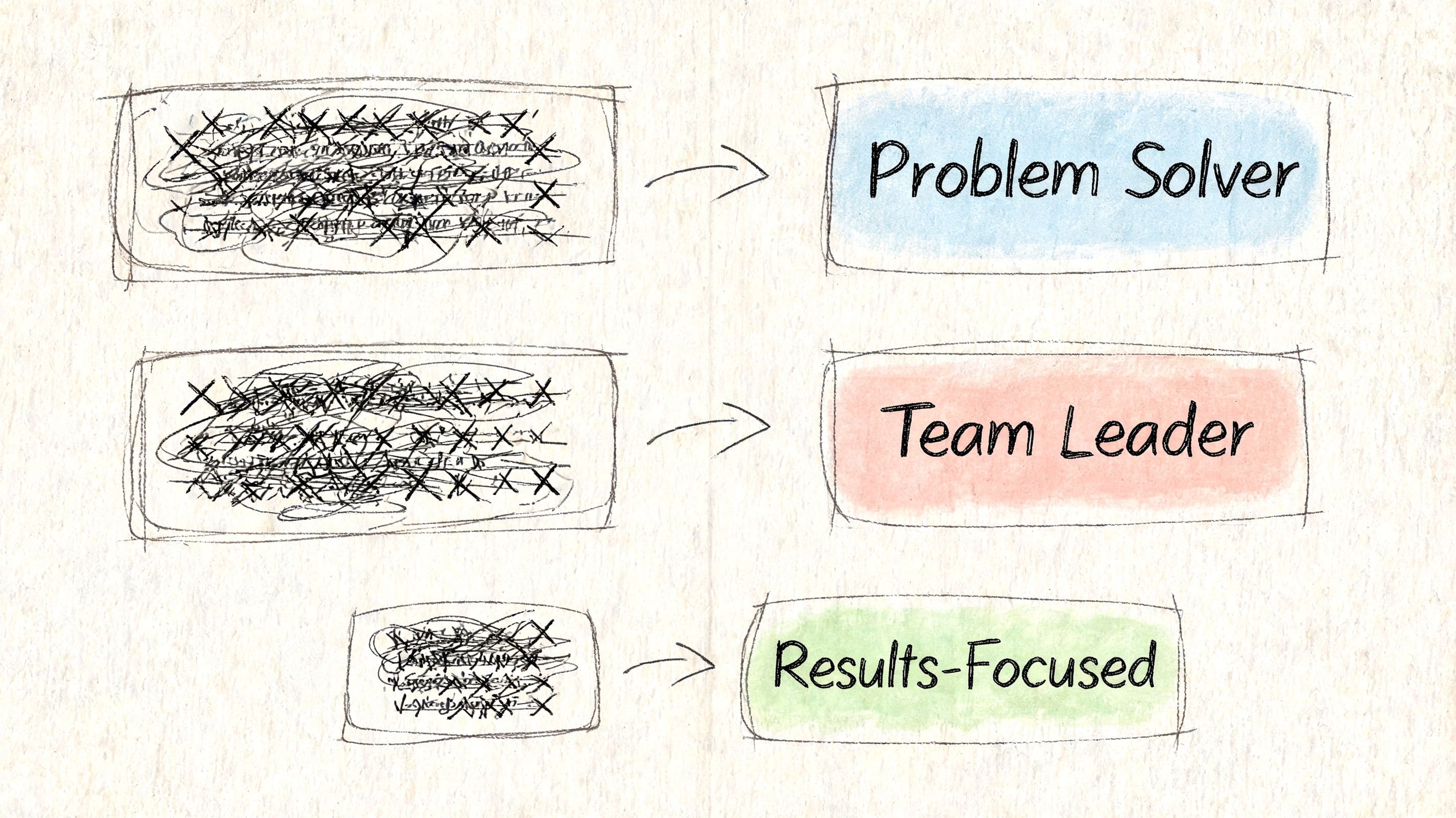
Weak personal statements are full of empty phrases like “hardworking individual” or “good team player”. Employers see those constantly. They don't learn anything from them.
A stronger version uses evidence and points toward a specific type of job.
Too vague
Motivated school leaver looking for a job where I can use my skills and gain experience. I am hardworking, punctual and a good communicator.
Better
Reliable school leaver with predicted GCSEs including Maths and English, strong organisation skills developed through coursework and school events, and practical customer-facing experience from volunteering. Looking for a retail or customer service role where I can contribute quickly and keep learning.
That version works because it sounds grounded. It links claims to actual evidence.
Turn vague duties into evidence
A 2025 Prospects.ac.uk survey of 5,000 UK recruiters found that including quantified bullet points can boost interview callbacks by up to 40% for candidates with no formal experience. That matters even more when your CV is light on paid jobs.
Here's what that looks like in practice.
Before
- Helped at school open evening
- Worked on a group project
- Volunteered in a charity shop
- Assisted in a café
After
- Helped welcome visitors and direct families during a busy school open evening, improving confidence speaking to unfamiliar people
- Contributed to a group project that scored 92%, coordinating tasks across 15 peers and meeting the final deadline
- Volunteered 50+ hours at a local charity, helping with events that raised £300
- Supported café staff during peak periods, serving customers quickly and handling basic cleaning and stock tasks
Good bullet points answer three quiet questions in the employer's mind. What did you do, how well did you do it, and why should I care?
If you've done unpaid work, don't hide it under “interests”. Put it in experience if it shows responsibility.
For more examples of how to write those bullets, see this guide to CV work experience examples.
Examples you can adapt for your own CV
Use these as a base, then swap in your real details.
Example personal statement for retail
Motivated school leaver with strong communication skills, predicted GCSEs including Maths and English, and practical experience helping at school events and volunteering locally. Comfortable speaking with customers, handling tasks in a fast-paced setting, and working as part of a team. Seeking a retail assistant role to build customer service experience.
Example education entry
St Mark's School, Leeds
GCSEs expected
Predicted grades include Maths and English
Relevant subjects: Business, Computer Science, English
Example school project bullet points
- Researched and presented a business case study to the class, strengthening public speaking and preparation skills
- Used spreadsheets to organise project findings and keep deadlines on track
- Worked with classmates to divide tasks fairly and complete the final submission on time
Example voluntary experience entry
Volunteer Helper, Community Sports Club
- Assisted with set-up and pack-down for weekly sessions
- Helped younger participants follow instructions and stay engaged
- Communicated clearly with parents and organisers during busy periods
The pattern is simple. Start with the action. Add the context. Finish with the result or skill shown.
Formatting Your CV for UK Employers and ATS
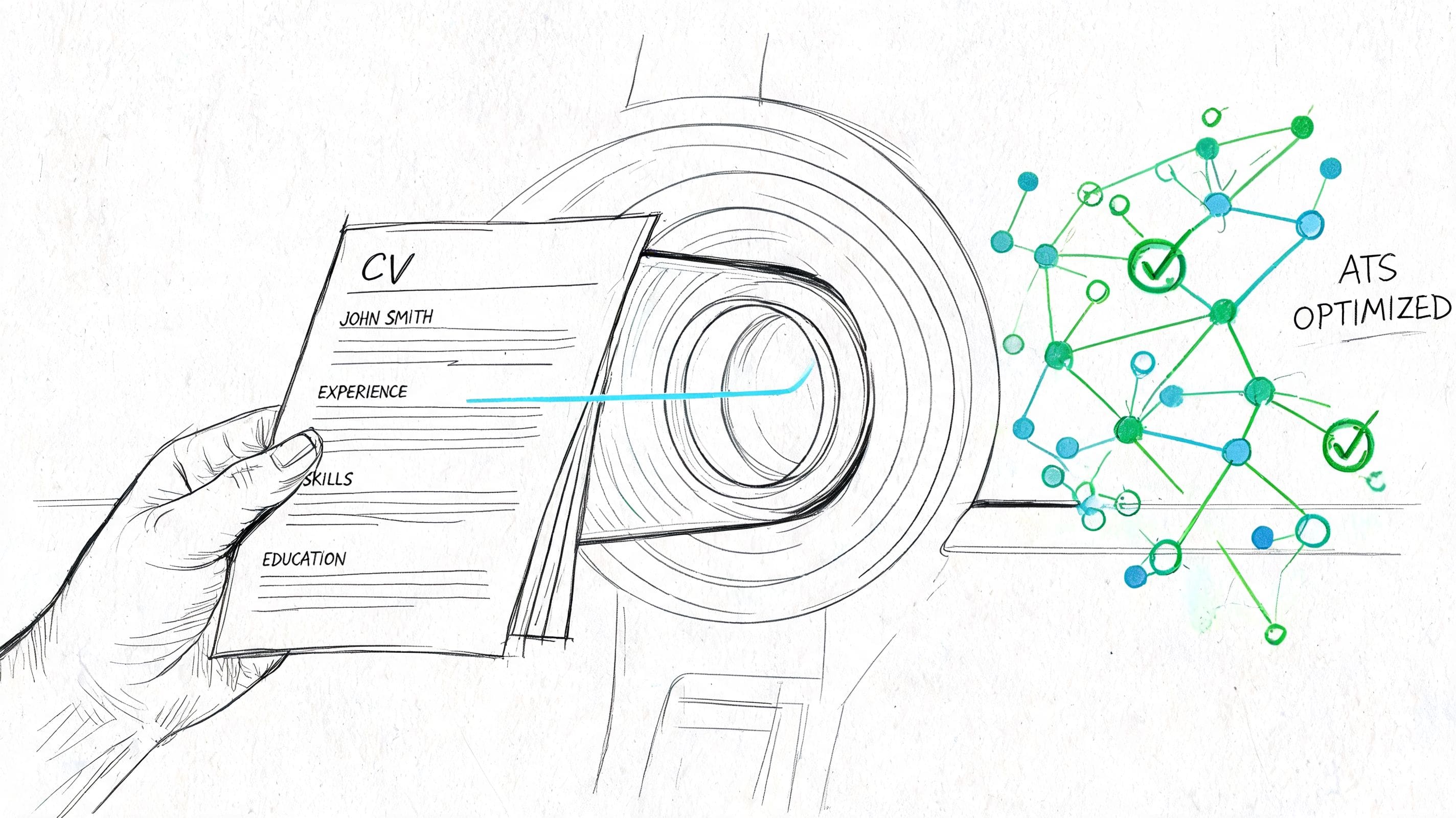
Formatting is where a lot of decent applications fall apart. Not because the candidate lacks potential, but because the CV is hard to read or impossible for software to parse properly.
Make it easy to scan
Keep your CV to one page if you're a school leaver. Use a clean font such as Arial or Calibri, standard spacing, and clear section headings. Fancy layouts often make weak CVs look busier, not better.
Your file name matters too. Save it as something like Firstname-Lastname-CV.pdf. That looks more organised than cv-final-final2.pdf.
If you ever need to understand file types more clearly before sending documents to employers, The Print Warehouse Ltd's print file guide gives a straightforward explanation of how common file formats behave.
Plain formatting wins. Employers aren't hiring you for your ability to decorate a document.
Avoid formatting choices that break ATS reading
Indeed highlights Bullhorn's 2025 analysis showing that up to 75% of CVs are rejected by Applicant Tracking Systems due to poor formatting before a human sees them. That's why your first priority is readability, not visual flair.
Avoid these common ATS problems:
- Text boxes and columns that scramble reading order
- Icons instead of words for phone, email, or skills
- Tables used for the whole layout rather than for simple comparisons
- Headers and footers for key contact details
- Images with text inside them that software can't read
Do this instead:
- Use normal headings such as Personal Statement, Education, Skills, Experience
- Mirror the job advert language where it matches your background
- Keep dates clear and consistent
- Save as PDF unless the employer asks for something else
If you want a more detailed breakdown, this article on building an ATS-friendly CV for UK applications covers the main formatting rules. One option school leavers use is CV Anywhere, which includes a Smart CV Builder and a Job Description Fit Checker to help produce ATS-friendly layouts and compare your CV against a role before you apply.
Common CV Mistakes School Leavers Make
Some mistakes don't just weaken your CV. They make employers question your judgement.
Mistakes that make a good candidate look careless
The first is the unprofessional email address. If your CV says you're ready for work but your email looks like a joke, the message clashes. Set up a simple address based on your name and use that.
The second is claiming skills you can't prove. If you say you have excellent leadership, there should be something on the page that supports it. A team role, event organisation, mentoring younger students, anything real. Empty claims are easy to spot.
Another common problem is sending the same CV everywhere. A retail employer and an office apprenticeship won't care about exactly the same parts of your background. Shift the emphasis. Don't rewrite your life story. Just bring the most relevant evidence to the top.
Then there's panic wording. Some school leavers sound apologetic, as if they're trying to excuse their lack of experience. Don't write “Although I have no experience…” and then spend half the CV defending yourself. Start with what you do have.
If job applications make you freeze up or overthink every line, working through a few social anxiety self-help strategies can help you get out of your own way and submit stronger applications.
Finally, don't ignore technical mistakes. Spelling errors, mismatched dates, odd capitalisation, and bad formatting can get your CV filtered out fast. This list of common ATS CV mistakes is worth checking before you send anything.
Your Final Checklist Before You Hit Apply
The last five minutes before you apply matter more than most people realise. This is where good CVs get tightened, and rushed CVs get exposed.
The checks that are not optional
Read this list slowly and tick each one off.
- Match the role: Does your personal statement mention the type of job you're applying for?
- Lead with evidence: Have you turned school projects, volunteering, or part-time work into clear bullet points?
- Show your education clearly: Can an employer find your predicted or achieved grades quickly?
- Keep it clean: Is the layout simple, consistent, and free from visual clutter?
- Use a proper file name: Have you saved it professionally?
- Proofread twice: Have you checked spelling, punctuation, and dates?
- Read it out loud: If a sentence sounds awkward when spoken, rewrite it
- Check contact details: Phone number and email must be right
- Save the final version properly: Use PDF unless the employer asks otherwise
- Tailor the keywords: Have you reflected the wording used in the advert where it naturally fits your experience?
If your interview is in another town, practical planning matters too. Looking at options for finding discounted rail tickets ahead of time can make attending interviews less stressful and more affordable.
One more useful check is getting another pair of eyes on the document. That can be a teacher, parent, careers adviser, or a digital review tool. If you want a structured second pass, CV review guidance can help you catch weak phrasing and missed details before the application goes out.
A final rule I give school leavers all the time is simple. Don't apply with the version you finished. Apply with the version you checked.
School Leaver CV Frequently Asked Questions
Should a school leaver CV be one page
Yes. For most school leavers, one page is the right length. You haven't been in the workforce long, so a concise CV is usually stronger than a padded one.
What file format should I use for my CV
PDF is usually the safest choice because it keeps your formatting stable. If an employer asks for Word or another format, follow their instructions exactly.
Do I need to include predicted grades
Yes, if you haven't received final results yet and the qualification is relevant to the role. Predicted grades give employers something concrete to assess.
Should I write a cover letter as well
If the employer asks for one, always include it. Even when it isn't required, a short customized cover letter can help explain why you want that specific role.
If you want to turn a rough draft into a polished application faster, CV Anywhere gives you one place to build an ATS-friendly CV, check how well it matches a job description, and keep track of every application without juggling separate documents and spreadsheets.
Tags
Related articles
CV Template UK for Students: Expert Examples
A lot of students search for a cv template uk for students when they're staring at a blank page and thinking, "I've barely worked anywhere, so what exactly goes on this?" The good news is that a stron...
CV Template UK Part Time Job Student: Get Hired in 2026
If you're searching for a cv template uk part time job student guide because you need something you can use today, keep it simple. A strong UK student CV for part-time work is one page, uses a clean r...
How to Make a CV for the First Time: A Step-by-Step Guide
Your first CV does not need a job history to work. It needs proof that you can do useful work. For first-time applicants, the strongest material often comes from school projects, coursework, volunteer...
How to Write a Resume With No Experience: A Complete Guide for 2026
You're probably staring at a blank document wondering how to write a resume with no experience without sounding unqualified. The fix is to stop building your resume around jobs you have not had and st...
Popular Articles
A lot of students search for a cv template uk for students when they're staring at a blank page and thinking, "I've barely worked anywhere, so what exactly goes on this?" The good news is that a stron...
If you're searching for a cv template uk part time job student guide because you need something you can use today, keep it simple. A strong UK student CV for part-time work is one page, uses a clean r...
Your first CV does not need a job history to work. It needs proof that you can do useful work. For first-time applicants, the strongest material often comes from school projects, coursework, volunteer...
You're probably staring at a blank document wondering how to write a resume with no experience without sounding unqualified. The fix is to stop building your resume around jobs you have not had and st...