How to Make Quick CV: The 2026 Method
Need to make quick cv for 2026? Learn our 30-minute method to create a professional, ATS-friendly CV. Get interviews faster!

If you want to make quick CV documents that get interviews, stop trying to build one "perfect" file for every role. The faster method is to keep one strong master CV, then tailor a targeted version for each application in minutes. That's what works in modern hiring, because your CV has to pass software first and make sense to a recruiter almost instantly.
This guide shows the workflow I recommend when speed matters. You'll learn how to build a master CV once, write stronger bullet points fast, tailor to a job description in a short editing session, and keep the rest of your application process organised.
Why 'Quick' Beats 'Perfect' in Today's Job Market
The old advice says you should spend days polishing a single CV until every line feels flawless. That sounds sensible, but it's not how hiring works now. A slow, generic CV loses to a fast, customised one.

More than 70% of CVs are rejected before reaching human review, largely because they don't include the right keywords to pass automated screening systems, and candidates typically include only 51% of the relevant keywords from a job description in their CV, according to CV Help's CV statistics. That means the main risk usually isn't imperfect wording. It's failing the first filter.
What recruiters actually reward
Recruiters and hiring managers don't reward the person who spent the longest in Word. They reward relevance, clarity, and evidence. If your CV quickly shows the right skills, uses the same language as the vacancy, and makes your value obvious, it does its job.
A quick CV should still be clean and credible. It just shouldn't be built from scratch every time.
Practical rule: Speed matters most after you've built a strong base. Fast tailoring beats slow reinvention.
What doesn't work
Some common habits waste time without improving results:
- Rewriting everything: Starting fresh for every role usually leads to fatigue and inconsistency.
- Obsessing over design: Fancy formatting won't rescue weak content or missing keywords.
- Sending one version everywhere: That's the fastest route to being screened out.
If you're currently duplicating effort with every application, use a system instead. A good place to start is this guide on how to create a resume fast, then adapt the same logic to a UK-style CV workflow.
Is your CV actually getting responses?
Your CV might be missing something important
Upload your CV → see its weakest areas → fix them, one by one.
Free. Takes less than 2 minutes.
The Master CV Method: A Repeatable System for Speed
The fastest professionals don't make a quick CV by typing under pressure. They make one by preparing properly once, then editing intelligently.
The foundation is a master CV. This isn't the version you send. It's your complete career inventory. It holds every relevant role, project, achievement, skill, certification, tool, and result in one place.

The method is straightforward. The master CV keeps all your history in one file, then you spend 15 to 20 minutes extracting the most relevant parts for each application. According to JobSprout's breakdown of resume mistakes, this approach can lift ATS pass rates from under 25% to over 75% because systems rank CVs by keyword match percentage.
What goes into the master CV
Think of it as a source document, not a polished final draft. It should include more than you'd ever send in one application.
Include these sections:
- Full work history: Every relevant role with dates, employer names, responsibilities, tools used, and outcomes.
- Skill clusters: Group skills into useful categories such as project delivery, stakeholder management, software, data, customer operations, leadership, or compliance.
- Project evidence: Add short examples of work you delivered, solved, improved, launched, supported, or fixed.
- Education and credentials: Degrees, courses, licences, awards, training, and ongoing study.
- Metrics and proof points: Save numbers, scope, volume, budget links, efficiency wins, retention outcomes, and revenue impact wherever you have them.
How to write entries quickly
Use one simple formula for most bullets:
Action verb + task + result
Examples:
- Led onboarding process for new client accounts, improving handover consistency across teams.
- Coordinated weekly reporting for senior managers, reducing delays in internal updates.
- Resolved customer escalations across multiple channels, supporting stronger service delivery.
Not every line needs a number in the master CV. The point is completeness. You can refine later.
Build your master CV once with more detail than you think you need. Editing down is faster than trying to remember achievements under deadline.
How to organise it so it stays usable
A messy master CV defeats the point. Keep it searchable and easy to skim.
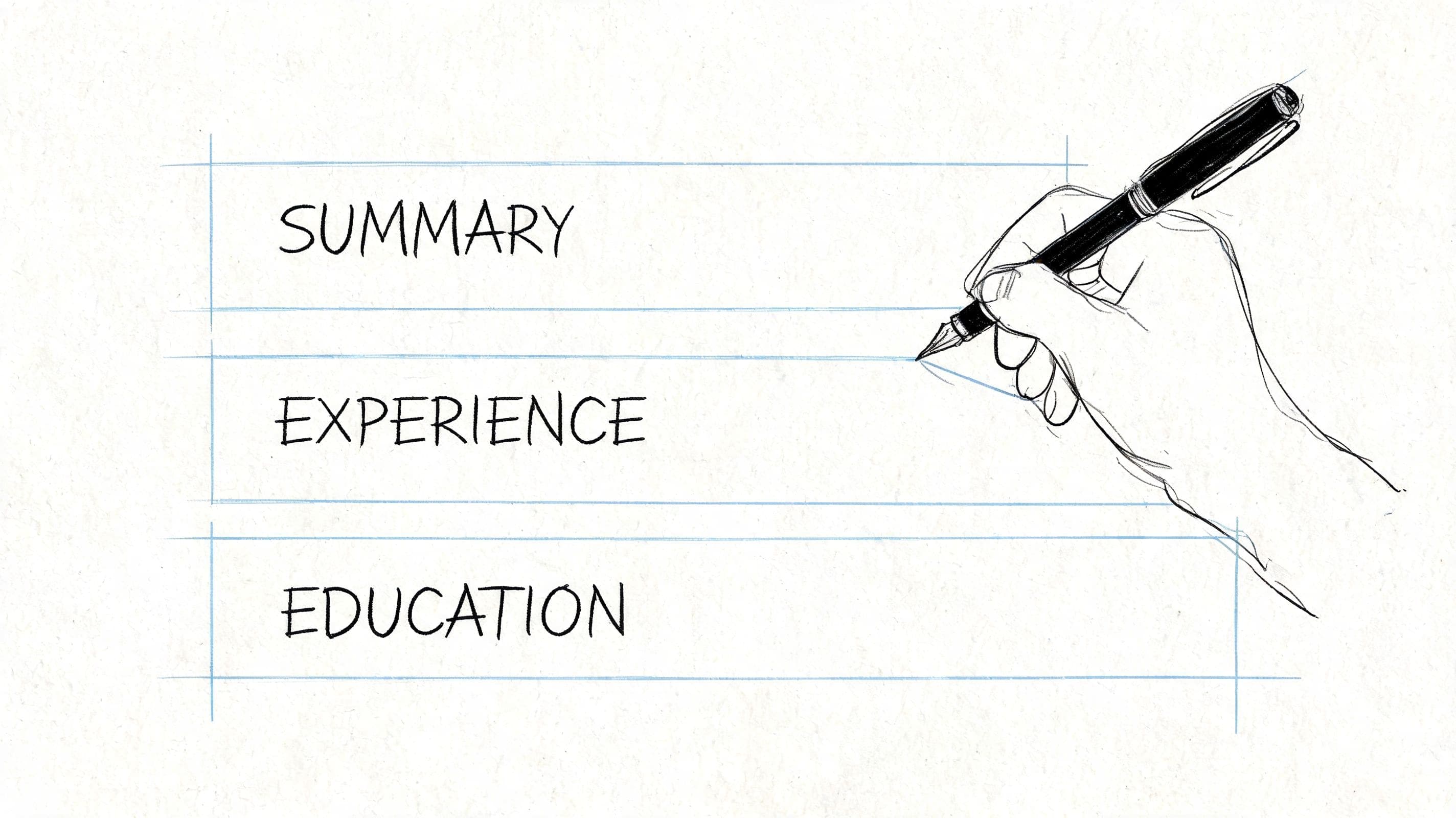
A simple structure works well:
| Section | What to store |
|---|---|
| Professional summary bank | Several summary variations by role type |
| Core skills | Keyword-rich lists grouped by function |
| Experience | Longer bullets with context and outcomes |
| Projects | Standalone examples you can pull into different roles |
| Education | Degrees, certifications, courses |
| Extras | Languages, memberships, publications, volunteering |
If you're applying actively, it also helps to track which version you sent to which employer. A dedicated job application tracker is much easier to manage than scattered notes and old file names.
Crafting High-Impact Content Without Wasting Time
A quick CV fails when the writing sounds vague. Most candidates don't lose out because they lack experience. They lose out because they describe it badly.
Analysis of more than 125,000 resumes found that 36% contained zero measurable results, while only 26% included at least five, according to Cultivated Culture's resume statistics. That gap matters because quantified achievements give employers faster proof of value.
The fastest writing formula that still sounds strong
When you're short on time, don't aim for literary brilliance. Aim for proof.
Use this structure:
- Start with action: led, built, improved, reduced, launched, delivered, analysed, coordinated, trained
- Name the work: what you did
- Add the result: a measurable outcome if you have one, or a clear business effect if you don't
Here's the difference.
| Weak bullet | Stronger bullet |
|---|---|
| Managed social media accounts | Grew social media engagement by using a more consistent content plan |
| Helped with team admin | Coordinated team admin and reporting, improving day-to-day organisation |
| Worked on customer service | Resolved customer issues across phone and email, supporting a smoother service experience |
If you do have metrics, use them. If you don't, write the effect plainly. "Improved reporting accuracy" is still better than "responsible for reports".
Where to find stronger material quickly
Many individuals already have better evidence than they think. Pull it from:
- Performance reviews: These often contain outcome language you can reuse.
- Project notes: Look for launches, deadlines met, systems introduced, or process fixes.
- Emails and handover documents: These reveal scope, ownership, and cross-team work.
- LinkedIn and old applications: Useful for recovering forgotten examples.
For technical roles, phrasing matters as much as content. If you need sharper examples for systems, tools, engineering projects, or infrastructure work, this guide on how to write a technical resume is a useful reference for turning technical tasks into readable achievements.
Strong bullets don't describe your job. They show the value of how you did it.
Don't overwork the summary
Your profile at the top should be short and targeted. Three or four lines is enough if it tells the employer what role you do, what strengths you bring, and what kind of environment you fit.
If that section always slows you down, use a clear framework and adapt it. This guide on how to write a resume summary gives a practical structure you can reuse across roles.
Tailor Your CV in 15 Minutes with Smart Analysis
Tailoring is where many individuals waste time. They know they should do it, but they don't know what to change first. So they tweak random lines, change a few verbs, and hope for the best.
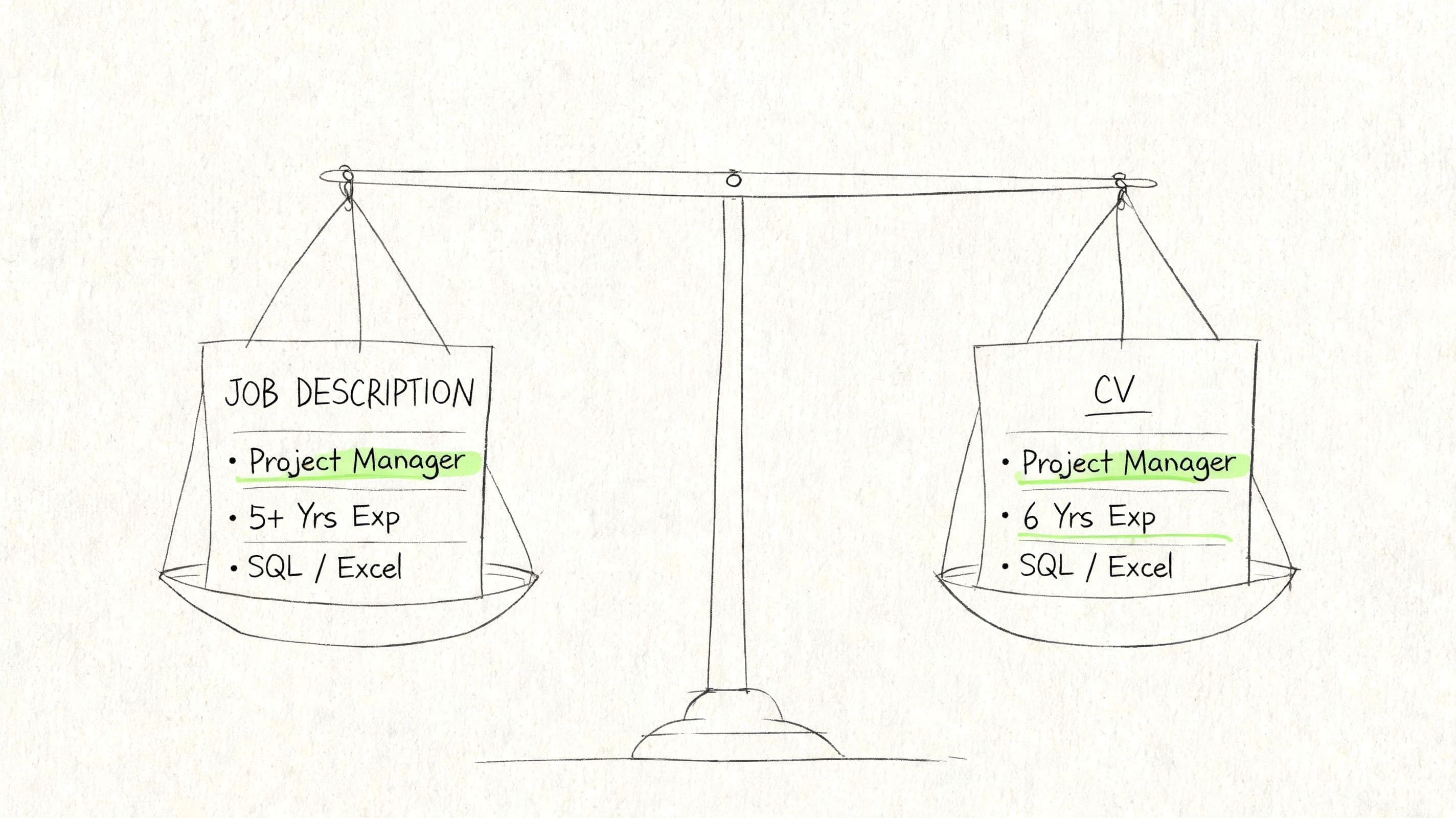
A better approach is to compare your master CV against the job description, then fill obvious gaps. That matters even more for early-career candidates and career changers. A 2025 LinkedIn Workforce Report noted that 62% of early-career hires succeed via transferable skills, as cited by The Undercover Recruiter. The problem is that most quick CV advice doesn't show people how to identify and position those skills clearly.

A simple 15-minute tailoring workflow
Use this sequence:
Paste the job description into a checker
Look for repeated skills, software, duties, and phrases. Pay close attention to terms in the requirements and responsibilities sections.
Mark the missing language
You're not trying to fake experience. You're checking whether your CV uses the same terminology the employer uses.
Open your master CV
Pull out achievements, tasks, and skills that match the role.
Reorder your content
Put the most relevant experience near the top. Move less relevant material down or remove it.
Edit the summary last
Once the body is aligned, write a short profile that reflects the vacancy.
Example for a career changer
Say you're moving from hospitality into project coordination.
Your old CV might focus on customer service, shift work, and day-to-day operations. The target role asks for scheduling, stakeholder communication, issue resolution, reporting, and cross-functional coordination.
Those aren't unrelated. They're transferable.
Here's how that shift looks:
- Hospitality phrasing: Managed busy front-of-house service during peak periods
Project-focused phrasing: Coordinated competing priorities in a high-pressure environment while maintaining service standards
- Hospitality phrasing: Trained new starters on procedures
Project-focused phrasing: Supported onboarding and process training for new team members
- Hospitality phrasing: Handled customer complaints
- Project-focused phrasing: Resolved issues quickly and communicated updates clearly to stakeholders
For this kind of editing, tools that analyse job descriptions are useful because they remove guesswork. CV Anywhere's AI CV checker explains how a JD Fit Checker can highlight match gaps so you can adjust wording and content faster.
Tailoring isn't rewriting your history. It's translating your experience into the language of the target role.
Beyond the Document: Streamline Your Entire Application
A quick CV helps, but a fast job search depends on more than the file itself. Most candidates lose time in the messy parts after writing. They forget where they applied, send the wrong version, miss follow-ups, or hunt through inboxes for job descriptions they should have saved.

That's why the workflow should cover three things: writing, sending, and tracking. In the modern job market, 55% of applications now involve shareable links, and data from EU job portals shows that interactive CV pages can increase interview conversions by up to 35%, according to Career Cubicle's article on visually attractive resumes. A static PDF still matters, but it's no longer the only useful format.
What an efficient setup looks like
A practical setup usually includes:
- One editable master file: Your source of truth
- Targeted CV versions: Saved clearly by role or employer
- A cover letter process: Reusable structure, then quick edits per application
- An application log: Role, date sent, contact, status, follow-up timing
- A shareable profile page: Helpful when recruiters want a link, not just an attachment
This is also where one connected platform can save effort. CV Anywhere combines a Smart CV Builder, JD Fit Checker, shareable CV pages, application tracking, and cover letter tools, so candidates can manage the whole process without jumping between separate documents and spreadsheets.
FAQ About Making a Quick CV
Can I really make quick CV versions without lowering quality
Yes, if you're editing from a strong master CV. Quick doesn't mean careless. It means you've already done the heavy lifting and you're now focusing on relevance.
Should I use the same CV for every job
No. That's the main mistake people make when they try to save time. Keep the structure consistent, but change the summary, keywords, ordering, and selected achievements for each application.
What if I have no measurable results
Use clear outcomes even if you don't have hard numbers. Explain what improved, what you supported, what you solved, or what you delivered. Then keep collecting stronger evidence for future versions.
How long should a quick CV be
For most early-career and mid-career candidates, keep it concise and relevant. Cut anything that doesn't help the employer understand your fit for that specific role.
What's the final check before I send it
Do a short proofread. Check job title alignment, dates, spelling, formatting consistency, and whether the key terms from the vacancy appear naturally in your CV.
If you want a faster way to build, tailor, and manage every application in one place, CV Anywhere gives you a practical workflow from master CV to job tracking without relying on disconnected documents.
Tags
Popular Articles
A practical guide to choosing a resume builder that saves time, improves formatting, and helps you land interviews faster.
A straightforward walkthrough of the resume format, sections, and writing choices that work best for US job applications.
Learn the structure, wording, and formatting expected in a UK CV so you can present your experience clearly and professionally.
Explore proven cover letter examples and templates you can adapt to write stronger applications and stand out to employers.
See why manual tracking systems break down and what to use instead to stay organised throughout a modern job search.