Your Ultimate Guide to the CV of Curriculum Vitae

17 min read

What is a CV of curriculum vitae? Learn the key differences from a resume, see the correct format, and build a perfect one with our expert guide.

Your Ultimate Guide to the CV of Curriculum Vitae

The best way to craft a comprehensive and professional CV of curriculum vitae is with a dedicated tool like CV Anywhere's CV builder. It ensures your document is perfectly formatted and optimised to highlight your unique skills, making the entire process much smoother. Think of your career history less like a brief advertisement and more like a detailed, professional archive. That's the best way to understand a curriculum vitae, or CV. It's a multi-page document that chronicles your entire academic and professional journey in meticulous detail.

What Exactly Is a CV of Curriculum Vitae?

Open book with reading glasses and pen on desk featuring blue banner with CURRICULUM VITAE text for comprehensive CV guide and professional career documentation

This is where it parts ways with a resume. A resume is a concise, one-to-two-page summary tailored to a specific job. A CV, on the other hand, provides an in-depth, exhaustive look at your entire professional and academic life.

This comprehensive approach is the standard in fields where a full history of your contributions isn't just nice to have—it's expected. We're talking primarily about academia, science, medicine, and research, where your credibility is built on the full scope of your work.

CV vs Resume Key Differences

To make the distinction crystal clear, here's a quick side-by-side comparison of a CV and a resume.

Attribute CV (Curriculum Vitae) Resume
Length Comprehensive and detailed; often 2-10+ pages. Concise and summarised; typically 1-2 pages.
Purpose To provide a full record of your academic and professional history. To secure an interview by highlighting relevant skills for a specific job.
Content Includes publications, research, presentations, grants, and affiliations. Focuses on work experience, skills, and quantifiable achievements.
Audience Primarily for academic, scientific, medical, or research roles. Primarily for corporate, non-profit, and most non-academic jobs.
Customisation Generally static, with minor tweaks for emphasis. Heavily tailored and customised for each specific job application.

Understanding these differences is key to making the right first impression in your job search.

The Core Components of a CV

A well-structured CV of curriculum vitae goes far beyond a typical work history. Its goal is to paint a complete picture of your expertise and accomplishments.

Key sections almost always include:

  • Comprehensive Professional Experience: A detailed account of your work history, listed in reverse-chronological order.
  • Detailed Educational Background: Includes degrees, institutions, and the titles of your dissertation or thesis.
  • Research and Publications: A complete list of all published works, from journal articles and book chapters to abstracts.
  • Presentations and Conferences: Details on academic or professional talks you've delivered.
  • Grants and Fellowships: Any funding, scholarships, or prestigious awards you have received.
  • Professional Affiliations: Memberships in relevant industry or academic organisations.

A resume is a snapshot; a curriculum vitae is the full documentary. The former is designed to get you an interview for a corporate role, whilst the latter is built to establish your credibility within an academic or scientific community.

When to Use a CV Instead of a Resume

Knowing when to use a CV is critical. Sending the wrong document can immediately signal that you don't understand the norms of the field you're trying to enter.

A CV is the standard if you're applying for a faculty position at a university, a post-doctoral research fellowship, or a medical residency. Recruiters in these areas need to see the full scope of your academic work and contributions to judge your fit.

On the flip side, for most corporate jobs in marketing, finance, tech, or operations, a concise resume is what they expect and prefer.

You can explore a variety of professional curriculum vitae examples to see how they're structured for different fields. Building an effective CV with a tool like CV Anywhere ensures every detail is correctly placed, making your professional story clear, compelling, and ready for your next big opportunity.

Ready to Apply These Tips?

Get your free CV review

Upload your CV and get instant AI suggestions to improve your chances

Building the Essential Structure of Your CV

Person typing on laptop displaying CV with CV Structure visible on background screen for professional CV writing and comprehensive career document formatting

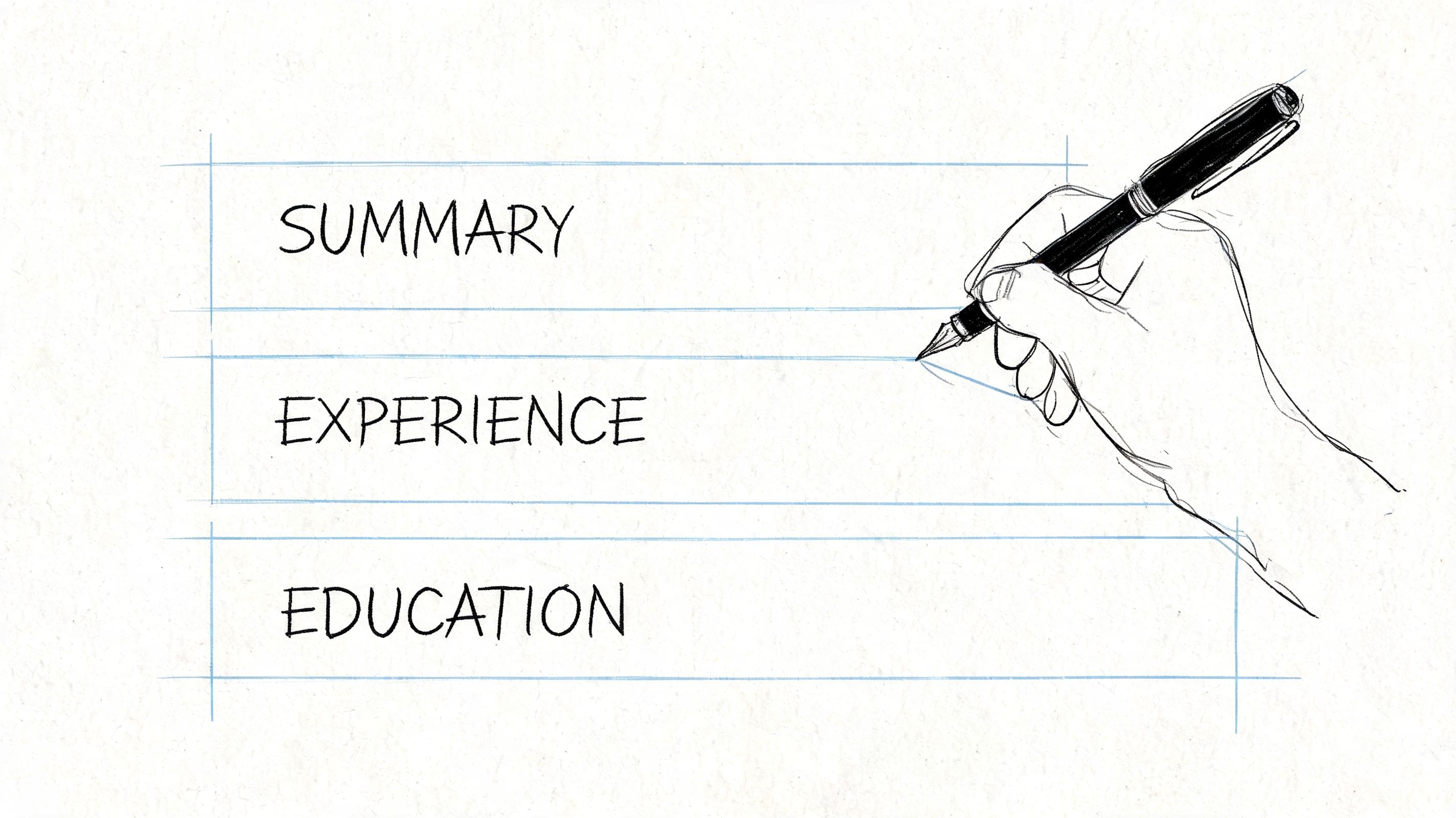
A powerful CV is so much more than a simple list of facts—it's the story of your professional and academic life, told in a logical, compelling way. The easiest way to get that polished, well-organised structure right is with a dedicated tool like CV Anywhere's builder, which walks you through creating a layout that just works. A clear structure makes your information easy to digest and, more importantly, pushes your biggest qualifications right to the top.

The gold standard format for a CV is reverse-chronological. In simple terms, this means you list your most recent jobs and degrees first. This approach is a win-win: it instantly shows a hiring manager or academic committee what you've been up to lately.

Foundational Contact and Summary Sections

Before you jump into the nitty-gritty of your professional history, you need two crucial elements to set the stage. Think of these as the header that makes it easy for recruiters to see who you are and get in touch.

  • Contact Information: This is the most straightforward but critical piece of the puzzle. Make sure to include your full name, phone number, a professional email address, and a link to your LinkedIn profile.
  • Professional Summary or Research Statement: This is your elevator pitch—a short, sharp 2-4 sentence paragraph that wraps up your expertise, key skills, and career goals. It should be tweaked and aimed directly at the specific role you're applying for.

This first block of information is your first impression. Double-check that it's accurate, professional, and compelling.

A well-structured CV acts like a roadmap for your career, guiding the reader through your journey of accomplishments. Without a clear structure, even the most impressive achievements can get lost.

Core Experience and Academic Sections

The main body of your CV is where you get to show off your accomplishments. For a much deeper look into how to organise these sections effectively, check out our guide on creating a comprehensive resume outline.

These are the non-negotiable sections you'll need:

  1. Professional Experience: Detail your roles, responsibilities, and—most importantly—your quantifiable achievements.
  2. Education: List your degrees, the institutions you attended, graduation dates, and any dissertation or thesis titles.
  3. Publications: Include all your peer-reviewed articles, book chapters, and conference proceedings.
  4. Presentations: List any talks, posters, or lectures you've delivered at conferences or seminars.
  5. Awards and Grants: Mention any funding, fellowships, or honours you've received.

Large-scale analyses show that work experience is the one section you'll find on nearly 100% of professional documents. Skills lists and a career summary follow closely behind, appearing on about two-thirds of applications. If you want to nail the basics of putting together a strong professional document, this guide on how to write a resume is a great resource.

Ultimately, this detailed framework forms the backbone of a strong CV of curriculum vitae, showcasing the full scope and depth of your expertise.

How to Tailor Your CV for Maximum Impact

Person's hand using pen to review CV document with blue Tailor Your CV folder and laptop on wooden desk for targeted job application and CV customisation strategy

Sending out the same generic cv of curriculum vitae to every employer is the fastest way to get ignored. The real secret to landing more interviews is transforming your CV from a simple history of your career into a targeted argument for why you are the perfect fit for this specific job.

This isn't just good advice anymore; it's a necessity. The vast majority of companies now use Applicant Tracking Systems (ATS) as their first line of defence against the flood of applications they receive.

Just how big is that flood? Applications per hire in the U.S. shot up by a staggering 182% between 2021 and mid-2024. As a result, nearly 99% of Fortune 500 companies rely on ATS to manage the volume. But here's the kicker: these systems reject about 75% of CVs before a human ever sees them, often for simple keyword or formatting issues. You can discover more insights about resume statistics at High5Test.

Dissecting the Job Description

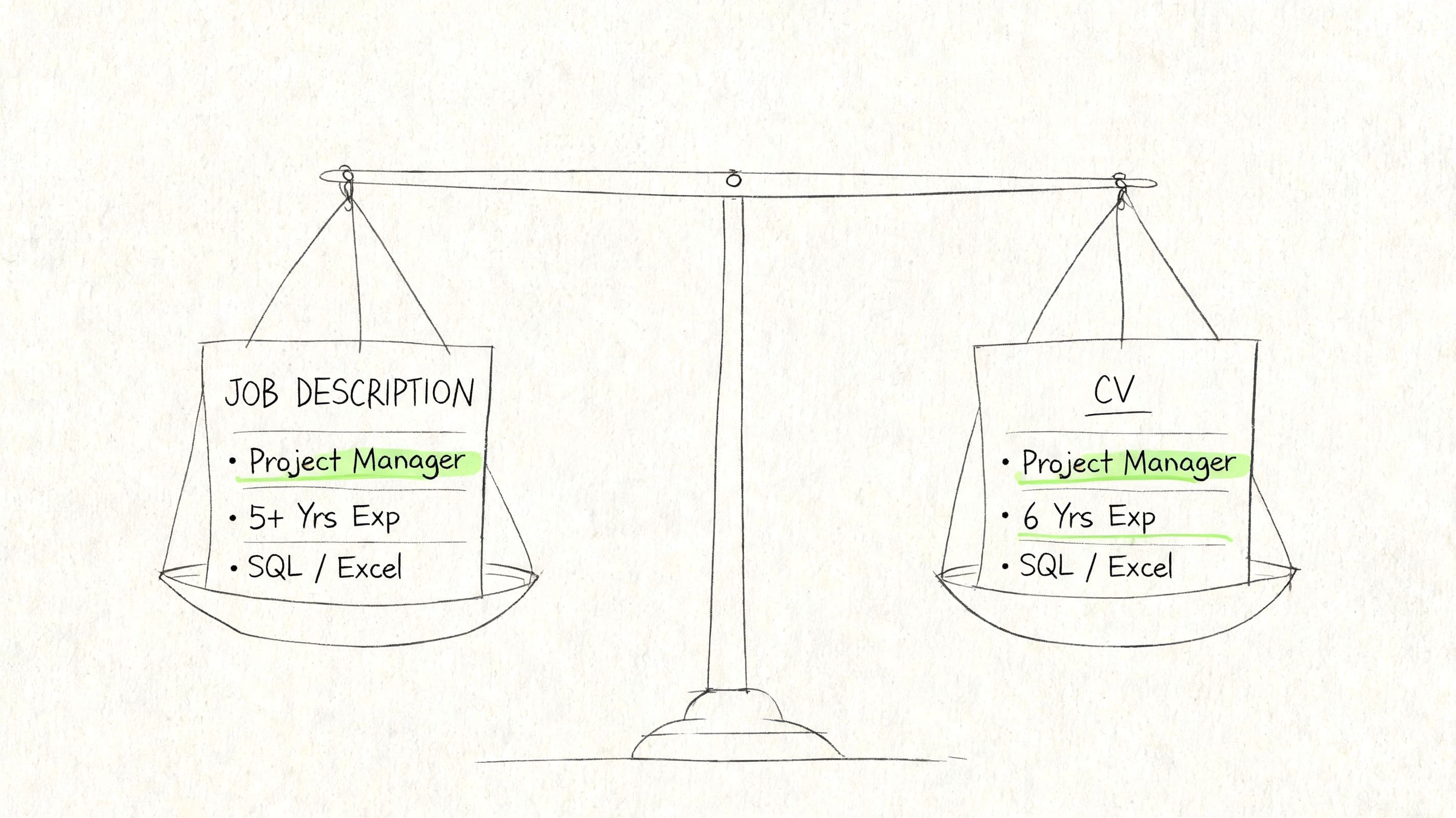
The first step to beating the bots and impressing a human is to treat the job description like a cheat sheet. It's the company telling you exactly what they're looking for.

Print it out or copy it into a separate document. Then, grab a highlighter and start marking every key skill, qualification, and responsibility they mention.

  • Hard Skills: Look for specific software (like Salesforce or Adobe Creative Suite), programming languages, or technical processes.
  • Soft Skills: Take note of terms like "leadership," "team collaboration," or "strategic problem-solving."
  • Company Values: Pay close attention to the language they use to describe their culture. Do they talk about "innovation," "customer obsession," or "sustainability"?

This exercise gives you a clear shopping list of keywords you need to build into your document.

Your goal is not just to get past the ATS, but to speak the employer's language. When a hiring manager reads your CV, it should feel like you wrote it specifically for them—because you did.

Weaving Keywords into Your Narrative

Once you have your list, the art is in weaving these keywords into your CV naturally. Don't just stuff them into a "Skills" section. That's lazy, and a human reader will see right through it.

Instead, reframe your accomplishments using the employer's own language. If the job ad repeatedly mentions "cross-functional project management," find a time you worked with different departments and describe it using that exact phrase. If they want a "data-driven decision-maker," talk about a time you used analytics to guide a strategy.

To make sure your formatting stays clean and readable by these systems, check out our guide on creating an ATS-friendly CV in the UK.

By aligning your cv of curriculum vitae with the job's specific needs, you're doing more than just showing you're qualified. You're showing you're interested, you pay attention to detail, and you're the solution to their problem. That's what gets you the interview.

Writing Descriptions That Showcase Your Achievements

Computer monitor displaying graph and achievement badges next to Quantify Impact sign for data-driven CV writing and measurable professional accomplishments

Here's one of the most common mistakes people make on their cv of curriculum vitae: they just list their job duties. But recruiters don't want to know what you were supposed to do; they want to know what you actually accomplished. The real magic happens when you shift from talking about passive responsibilities to framing your work in powerful, achievement-oriented bullet points.

This isn't just good advice, it's a necessity. Surveys show that hiring managers spend just 6–8 seconds scanning a CV. With an average of 250 applications flooding in for a single job opening, only about 2% of candidates ever make it to the interview stage. Failing to show your impact is one of the fastest ways to get filtered out.

Using the STAR Method to Frame Your Success

So how do you tell a compelling story in just a few seconds? An incredibly effective way to structure your accomplishments is the STAR method. It gives you a simple, repeatable framework for highlighting your contributions.

Here's the breakdown:

  • Situation: Briefly set the stage. What was the challenge or context?
  • Task: What was your specific role or responsibility in that situation?
  • Action: Detail the concrete steps you took to handle the task.
  • Result: Quantify the outcome. This is where you bring in the numbers to show the positive impact.

Following this formula turns your bullet points from vague claims into mini-case studies that prove your value.

Think of each bullet point not as a line item, but as a headline for a success story. Your goal is to make the reader stop and think, "Wow, I want to hear more about how they did that."

Transforming Responsibilities into Achievements

Let's put this into action. A powerful bullet point almost always starts with a strong action verb and ends with a measurable result. Numbers are your best friend here—they make your contributions feel tangible and real.

The table below shows how to reframe a basic responsibility into an achievement that grabs attention.

Transforming Responsibilities into Achievements

Passive Responsibility Achievement-Oriented Bullet Point
"Managed social media accounts." "Grew social media engagement by 45% across three platforms in six months by implementing a new content strategy."
"Responsible for managing projects." "Led a cross-functional team to deliver a key project 15% ahead of schedule, resulting in a £50,000 cost saving."
"Wrote articles for the company blog." "Authored 20+ SEO-optimised blog articles that increased organic website traffic by 30% over one quarter."

This simple shift transforms your CV from a passive list of duties into an active showcase of what you bring to the table. For more ideas, take a look at our guide filled with more examples of accomplishments for your resume. When you focus on metrics and impact, your CV won't just be read—it will get you noticed.

Adapting Your CV for Different Career Stages

The story you tell with your CV isn't a static one; it has to evolve right alongside your career. Think about it—a one-size-fits-all approach just doesn't make sense. What a recent graduate needs to spotlight is worlds away from what a seasoned executive should be highlighting.

The first step is simply recognising where you are on your professional journey. From there, you can adapt your CV's strategy, shifting focus, reordering sections, and making sure the most powerful information is the first thing a recruiter sees. The goal is to craft a narrative that perfectly matches your current ambitions.

For Recent Graduates

When you're just starting out, your academic achievements and raw potential are your biggest selling points. Since you likely have limited formal work experience, your CV should lead with your strengths. That means placing your education section right at the top, immediately after your professional summary.

Your mission is to build a compelling case for your skills and ambition. Focus on these areas:

  • Relevant Coursework: Don't just list your degree. Mention specific classes or projects that line up with the job you're targeting.
  • Internships and Volunteering: Treat these like real jobs. Use achievement-focused language and quantify your impact whenever you can.
  • Academic Projects or Thesis: Go into detail about your research, methods, and findings, especially if they show off skills like analysis, problem-solving, or project management.

For Mid-Career Professionals

If you've been in the workforce for a whilst, your CV needs to tell a clear story of growth, impact, and results. Your professional history is now the star of the show, so it moves to the forefront. Your education section can take a backseat, moving further down the document.

The emphasis now is all about demonstrating a consistent track record of success. Your primary focus should be on:

  • Quantifiable Achievements: This is crucial. Stop listing duties and start showcasing results. Use hard numbers to prove your value, like "Increased team productivity by 25%" or "Managed a departmental budget of £2M."
  • Leadership and Mentorship: Highlight every instance where you led a team, managed a project, or mentored junior colleagues. This proves you're ready for the next level of responsibility.
  • Career Progression: Make sure your experience section shows a clear, logical path of growth. Each role should look like a step up, with increasing responsibility and skill development.

For Career Changers and Tech Candidates

Changing careers? Your main job is to build a bridge from your past to your future. Your CV has to connect the dots for the hiring manager, showing exactly how your existing skills are transferable and valuable in a totally new context. A strong, skills-based summary at the very top is non-negotiable here.

Tech candidates, on the other hand, face a different challenge: you need to provide concrete proof of your technical chops.

A tech CV without links to a portfolio or GitHub is like an artist arriving without their work. Recruiters and hiring managers want to see tangible evidence of your coding skills, not just a list of libraries you claim to know.

Your cv of curriculum vitae absolutely must have a dedicated technical skills section near the top. Even more important are the links to your GitHub, personal portfolio, or any relevant technical blogs. To see how different layouts can handle these specific needs, it's worth exploring some effective UK CV template examples.

Frequently Asked Questions About a CV

When you're putting together a cv of curriculum vitae, a few common questions always seem to pop up. Getting straight answers to these can make the difference between a CV that gets noticed and one that gets overlooked. It's the little details that often matter most.

Let's clear up some of the most common sticking points job seekers run into.

How Long Should a CV Be?

Unlike a resume, a CV doesn't have a hard page limit. The real rule is to be comprehensive but relevant. Think of it as your complete professional story, not just the highlights.

If you're in your early career or have under a decade of experience, a two or three-page CV will probably cover everything you need. But for seasoned academics, researchers, or doctors with a long list of publications and speaking engagements, a CV can easily stretch to 10 pages or more.

The goal is to include all vital information without adding fluff. Never cut crucial details just to hit some imaginary page count.

Should I Include a Photo on My CV?

This one is all about location, location, location.

In most English-speaking countries like the United States, the UK, and Canada, you should never include a photo. It's seen as unprofessional and can introduce hiring bias, which is something companies actively try to avoid.

On the other hand, in many parts of Europe and Asia, a professional headshot is standard practice and often expected. Your best bet is to always research the local customs for the country where you're applying.

A one-size-fits-all approach is a classic CV mistake. What's considered standard in one country can be a major red flag in another. A little homework on regional expectations goes a long way.

Can I Use the Same CV for Every Application?

Absolutely not. Sending out a generic CV is one of the fastest ways to get your application tossed aside. Whilst the core of your document will stay the same, you have to fine-tune it for every single role.

Take the time to read the job description carefully. Go back to your CV and highlight the skills, experiences, and publications that directly line up with what they're looking for. This simple step shows the employer you've done your homework and are a serious, interested candidate.

Of course, a great CV is just one piece of the puzzle. For more on how to package everything together, check out this guide on assembling your application packet.

Professional Summary vs. Objective Statement

These two introductions serve very different purposes, and picking the right one depends entirely on where you are in your career.

  • Professional Summary: This is a 2-3 sentence snapshot of your career highlights, biggest achievements, and top skills. It's perfect for experienced professionals who have a solid track record to showcase.
  • Objective Statement: This is all about your career goals and what you're looking for in a new position. It's a much better fit for recent graduates or people changing careers who need to explain their ambitions and transferable skills.

Choosing the right opener really sets the stage for the rest of your cv of curriculum vitae.


Ready to create a polished, professional CV that gets results? The CV Anywhere Smart CV Builder streamlines the entire process, from formatting to content. Start building your standout CV for free today!

Tags

curriculum vitaeCV formatCV writingacademic CVprofessional CVcareer documents

Related Articles

The Only CV UK Template You'll Ever Need

A solid cv uk template is the bedrock of any successful job hunt in the UK. Think of it less as a fill-in-the-blanks document and more as a professional, recruiter-approved framework. The right one en...

Read more →

Popular Articles

1
Your Ultimate Guide to the CV of Curriculum Vitae

The best way to craft a comprehensive and professional CV of curriculum vitae is with a dedicated tool like CV Anywhere's CV builder. It ensures your document is perfectly formatted and optimised to h...

2
Template of Resume: Why a CV Builder Beats Any Template

Stop searching for the perfect template of resume. Trawling through hundreds of options to find one that fits your experience is an outdated, frustrating process. The solution isn't a better template;...

3
The Best Resume Maker for Free: 12 Top Options for ATS-Friendly Resumes

Here is a detailed breakdown of the 12 best options for a resume maker for free available today. We've done the research for you, so you can stop searching and start building a professional, job-winni...

4
A Practical Guide to Using Resume Templates Effectively

Picking the right resume templates is your first—and most important—move in getting a recruiter's attention. It's not just about looks; a great template is a strategic tool. It organizes your career s...

5
The Only CV UK Template You'll Ever Need

A solid cv uk template is the bedrock of any successful job hunt in the UK. Think of it less as a fill-in-the-blanks document and more as a professional, recruiter-approved framework. The right one en...